
Here we are at the start of ‘Green Week’ in which the UK government has decided to ask some experts about whether or not we should amend our target of being carbon neutral by 2050?! Talk about asking a stupid question! In the very same week, Cuadrilla will be allowed to start fracking – drilling for more fossil fuels in Lancashire, whilst those who peacefully protested are sent to prison (a little ironic!) and the Climate Change Minister – Claire Perry, has declared it is not her government’s job to advise people on a climate friendly diet (despite the evidence, which I regret, showing that we need to seriously curtail our meat intake, especially of beef and lamb). What is the role of government, I am left wondering…….?
We have 12 years! That really isn’t a very long time. 12 years in which to drastically change our minds and our behaviour about how we are living, or face the devastating consequences of the impact of climate change for ourselves, our children and our children’s children.
Gandhi wrote so powerfully about the seven social sins, as he saw them:
1) Politics without Principle
2) Wealth without Work (weird how this has switched in the social conscience to poverty without work….how did poverty become the sin?)
3) Commerce without Morality
4) Pleasure without Conscience
5) Education without Character
6) Science without Humanity
7) Worship without Sacrifice
For the health and wellbeing of people and the planet, we need to change and we need to change now. As my friend Martin Scott says, the facades are down. We can see things clearly for what they are. That means we cannot and must not allow ‘business as usual’ to continue. This is our moment. We cannot simply carry on with the same old, same old. If ever there was a moment for us to change – it is now! Our economic model is literally destroying us. Our politics are increasingly tainted with a rhetoric of blame and fear. Unless we change now, with the backdrop of environmental disasters, food and water shortages, driven by human greed, then within a few short years, we will be facing war and humanitarian atrocities at a truly alarming scale.
Our only hope, is repentance. Repentance, as David Benjamin Blower tells us, IS the revolution. An old, biblical phrase which means to completely change our hearts and minds and instead live utterly differently. It means laying down our consumerism of the world and instead choosing to become good stewards of it, letting go of our own hedonistic selfishness in preference for the ‘other’ and sustainability of the earth. It means recognising that our economic model is broken and unjust, so we need to find a new way that is distributive and regenerative. It means learning to love our enemy rather than hate them, curtailing our excesses and learning to live more simply, caring for the poor instead of scapegoating them, promoting the welfare of children rather than constantly comparing and measuring them. It means breaking the chains of the global slave trade, stopping our appalling pollution now, not in 2050 and finding a way to live in peace.
This isn’t some hippy utopia, it is, I believe, what God always hoped for with us. Repentance isn’t some weirdo religious experience, it is a gutsy, humble recognition that we’re in a mess and we need forgiveness from God, ourselves, each other and the planet. Repentance is a complete change of heart and mind, away from death to life, from greed to gift, from destruction to renewal, from darkness to light, from hate to love.
I have found in my journey of faith in the person and teaching of Jesus, that only the love of God really changes my heart and deals with my pride, my greed and my selfishness. Sadly, (predominantly) white, evangelical Christianity has aligned itself more with nationalism and free-market capitalism than what I read Jesus to teach in the scriptures. A dangerous theology has developed which equates a strong economy as being a sign of God’s ‘financial blessing’ and ‘favour’, giving little thought to the raping of the earth’s resources or the injustice upon which such ‘prosperity’ is built. When Jesus said, “Repent, for the Kingdom of God is here”, he wasn’t saying that he was going to replace the Roman Empire with an even more awful and utterly destructive system. He was inviting us to open our eyes and see that the ways of God could not be more different to Empire and are about ‘life poured out love’ or ‘self-giving, others empowering-love’, where all are welcome, all are set free and all can become stewards of this way of kindness and peace. It’s not easy to go against the system – it takes sacrifice – but it is the only thing that can lead to our salvation – something we need more than ever.
I have little hope that any government or system, with all their vested interests, can or will take the precarity of our situation seriously enough. And so it falls to you and me – we the people together. Personal and corporate repentance. It’s time (As Michael Jackson sang) to look at the man or woman in the mirror – and make that change.
It is true, that our work may well feel apparently worthless, futile and achieve no result at all – in all honesty it’s why I’ve made excuses for not changing certain things (like eating beef far too often – though that changes now!)……so as Thomas Merton reminds us, we must focus on the value, the rightness and the truth of the work we must do, itself…….In the end….he says…..”it is the reality of personal relationships that save everything.” So, don’t feel overwhelmed by the enormity of it. Make your own repentance yourself and amongst your relationships and bit by bit, we might just make a difference. Doing nothing is not an option. Repentance IS the revolution – and a revolution is what we need. Grace gives the opportunity to make a fresh start. Are you ready for it? What changes will you make? If not now, when? If not us, who?
 “Christendom”, and has very little to do with the person of Jesus of Nazareth. The dominant story, as we have it now, took it’s shape in the fourth century, under the partnership of the Emperor Constantine, and a theologian by the name of Eusebius. At this particular point in history, the message of Christianity was spreading like wild-fire throughout the Roman Empire and beyond. It very much challenged the status quo and the power dynamics of the Empire, calling for people to change the way they thought about who God is (a loving father, not a dominant emperor), to consider all people equal, to undo economic oppression and follow the radical way of love, partnering with God for reconciliation, healing and peace. This view of God didn’t suit the Emperor, nor the philosophy of Empire.
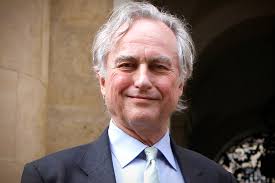 This allowed an understanding to develop that God is actually quite like a Sovereign Emperor who rules the whole world, a God very much like the one Richard Dawkins describes in his famous book – and why would anyone believe in a “jealous and proud of it; a petty, unjust, unforgiving control-freak; a vindictive, bloodthirsty ethnic cleanser; a misogynistic, homophobic, racist, infanticidal, genocidal, filicidal, pestilential, megalomaniacal, sadomasochistic, capriciously malevolent bully” God like that?! No thanks! But this is the kind of God that Empires depend on. This is the kind of God that those with power through the centuries purported God to be like in order to hold onto their own power, making Jesus the great warrior and God the threatening one to be feared. Constantine understood that harnessing the message of Christianity gave him more control. The church leaders understood that partnering with the empire would mean greater safety and prosperity for themselves.
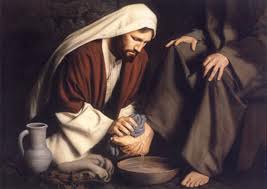 foremost about self-giving, others-empowering love, and therefore he cannot be like the God caricatured by Richard Dawkins, nor can he be a fluffy grandpa, a doting dad, a domineering dictator or an amalgamation of all of these, dressed up as Santa Claus. That means that the Christian scriptures have to be wrestled with and studied carefully with this lens firmly in tact. It also utterly changes the whole idea that Christianity could ever become a “state-religion”, uphold the divine right of kings (or indeed presidents/republics etc that behave in the same ways), or the support the propping up of political ideologies that lead to the oppression of the poor, marginalisation of the other or rejection of any person based on any part of their identity.
 like. This human Jesus, stood at the pinnacle of the Roman Empire, proclaiming himself the son of God in direct contrast to the empires of the day. But humanity did not like this image of God and so we killed him. But in his death, he took upon himself all that is broken in us and in our world and nullified its power, overcoming death through his endless, self emptying, others empowering love, and released the potential for new hope, creation and life. To me, this is the story of salvation, that out of our own selfishness, we can be re-activated into a place of love, in which we are free to choose to benefit others ahead of ourselves and bring this shalom or wellness to those around us, sometimes seeing miracles and sometimes not, because although God is good and more powerful than any other force or being, shit still happens; and because he is essentially kenotic, he is therefore unable to just intervene whenever he feels like it. He is unable to be untrue to his nature and in Him an uncontrolling love comes first.
 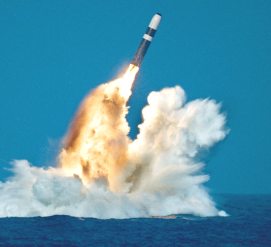 behind it the immense threat of the nuclear bomb, which I suppose you could liken to hell. Our view of leadership, our view of how government should behave, our view of the role of the state is actually pretty messed up, and I am arguing that it is messed up because it was shaped by a very warped view of God, who mostly cares for us, but has the great threat of eternal punishment for those who don’t believe quite correctly. That is not to say that all will be part of a heavenly future, but I would say that those who pursue the way of love are actually following the way of Jesus far more than those who follow the way of their version of the truth. The truth will set us free, but the truth is: (as Belinda Carlisle – that great theologan told us) in heaven, love comes first!! So when people pray the Lord’s prayer – ‘thy kingdom come, thy will be done on earth as it is in heaven’ – this looks very little like our current practices of government or nation states and the ways they behave in the earth.
 change the way we understand everything. The glory of God is not found in might, power, dominion and sovereignty. No, it is found in his cruciform nature. And if the earth can be filled with the glory of God rather than the ‘glory of empire’, where love is the antidote to fear, joy the antedote to debt, goodness the antedote to control through law and peace the antedote to violence, then together we might begin to taste a little bit of heaven.
 reimaginingthefuture