
 I have waited a while to write this post. It follows on in the series I started on this topic. It seems clear that the Brexit vote was about three key elements: taking control (whatever that means) of our own money, our own laws and our own immigration. I hope to write another blog on those three things another time, but in this time of transition, we must ask ourselves some questions about the kind of future we want to co-create.
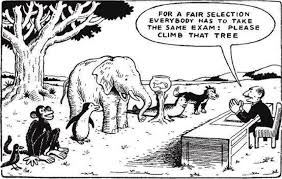 I have to say that when I look at our education system, I am both heartened and dismayed. I am heartened by the amazing quality of teachers across the UK, but I am dismayed by how they are treated as a profession by our mainstream press. I am heartened by the quality of our children and young people and the hopeful possibilities they carry, but I am dismayed by the increased burden of mental health problems many of them suffer. I am heartened that there is so much great thought around education and a shared learning between nations about how to release the potential in each child, but I am dismayed by the lack of application of this learning within the UK. I am heartened that there is an increasing realisation that Ofsted reports can offer only a small snapshot of what goes on in any school and are not a fair representation of all that goes on in any one institution, but I am dismayed by our growing measurement problem. By this I mean that the constant scoring and grading of our children and young people and the comparisons made between our various schools is so detrimental to their development and achievement that we ought to seriously consider the weight it is allowed to carry in our education systems. When our children and young people are some of the least happy in Europe and live in a country where the gap between the richest and poorest, both in terms of economics and educational ‘outcomes’ is one of the worst in Europe, we have to ask ourselves some searching questions.
So, in reimagining education, let’s reaffirm that every child is unique, beautiful,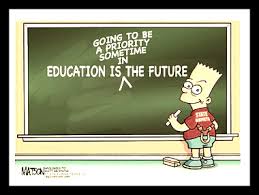 worthy of love and full of potential. Let’s also recognise that our education system now is one of the few things that has not evolved since the time of the Industrial Revolution and is itself in need of serious renewal and transformation. In Germany, they have managed to elevate practical skills and knowledge to that of intellect. This has given them the ability as a nation to have a much more diverse economy, especially investing in green technologies and manufacturing in a way that cares for the future. In Finland, they have a reverence for the teaching profession that we would do well to adopt here. We need to think of teaching as a sacred gift and it needs to be taken this seriously by those who pursue it as a career. A Head Teacher I know recently told me that she no longer needs teachers who see themselves as having a job, but those who understand that teaching is a vocation and a calling. It is about being willing to parent a generation, not just fill them with knowledge.
Our educational environments must be places where we teach our children how to think, not just what to think, how to converse, not just what to say and how to listen attentively not only hear. We must help them learn about their own personalities and gift mixes. We must help them to think about the values from which they live, speak and act, helping them therefore to shape their behaviours in line with this (Steve Peters). We must allow them to question some of the damaging ways we live (war, pollution, work-patterns) and dream of and learn to create futures of peace, sustainability and wellness. We need a vision large enough to ensure that each generation creates a seedbed of opportunity for the next.
The danger of becoming more ‘in control’ (as per our Brexit wishes) is that we become more controlling. The purpose of education is not to control but to release, not to maintain the status quo but to attain a brighter future, not to perpetuate hate and violence but to breathe love and peace, not to tear down but to build up and encourage, not to divide but to build community, not to prepare human beings to be fodder for the economic machine but to ensure the economy serves them to be live a life of hope-filled potential. As with healthcare, we need to de-politicise the education system, hold dear in our hearts those given to teach, caring for their wellbeing and minding how we speak of them. We must partner with them and entrust them with our precious caterpillars as they hold them through the great metamorphosis that is learning before they spread their wings and make their flight to shine like stars in a future sky that the rest of us will never see.
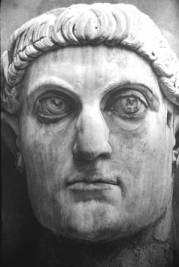 “Christendom”, and has very little to do with the person of Jesus of Nazareth. The dominant story, as we have it now, took it’s shape in the fourth century, under the partnership of the Emperor Constantine, and a theologian by the name of Eusebius. At this particular point in history, the message of Christianity was spreading like wild-fire throughout the Roman Empire and beyond. It very much challenged the status quo and the power dynamics of the Empire, calling for people to change the way they thought about who God is (a loving father, not a dominant emperor), to consider all people equal, to undo economic oppression and follow the radical way of love, partnering with God for reconciliation, healing and peace. This view of God didn’t suit the Emperor, nor the philosophy of Empire.
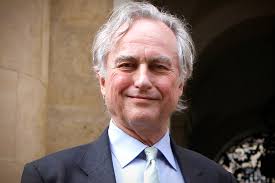 This allowed an understanding to develop that God is actually quite like a Sovereign Emperor who rules the whole world, a God very much like the one Richard Dawkins describes in his famous book – and why would anyone believe in a “jealous and proud of it; a petty, unjust, unforgiving control-freak; a vindictive, bloodthirsty ethnic cleanser; a misogynistic, homophobic, racist, infanticidal, genocidal, filicidal, pestilential, megalomaniacal, sadomasochistic, capriciously malevolent bully” God like that?! No thanks! But this is the kind of God that Empires depend on. This is the kind of God that those with power through the centuries purported God to be like in order to hold onto their own power, making Jesus the great warrior and God the threatening one to be feared. Constantine understood that harnessing the message of Christianity gave him more control. The church leaders understood that partnering with the empire would mean greater safety and prosperity for themselves.
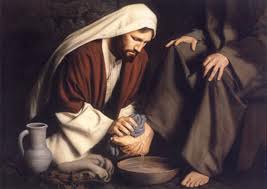 foremost about self-giving, others-empowering love, and therefore he cannot be like the God caricatured by Richard Dawkins, nor can he be a fluffy grandpa, a doting dad, a domineering dictator or an amalgamation of all of these, dressed up as Santa Claus. That means that the Christian scriptures have to be wrestled with and studied carefully with this lens firmly in tact. It also utterly changes the whole idea that Christianity could ever become a “state-religion”, uphold the divine right of kings (or indeed presidents/republics etc that behave in the same ways), or the support the propping up of political ideologies that lead to the oppression of the poor, marginalisation of the other or rejection of any person based on any part of their identity.
 like. This human Jesus, stood at the pinnacle of the Roman Empire, proclaiming himself the son of God in direct contrast to the empires of the day. But humanity did not like this image of God and so we killed him. But in his death, he took upon himself all that is broken in us and in our world and nullified its power, overcoming death through his endless, self emptying, others empowering love, and released the potential for new hope, creation and life. To me, this is the story of salvation, that out of our own selfishness, we can be re-activated into a place of love, in which we are free to choose to benefit others ahead of ourselves and bring this shalom or wellness to those around us, sometimes seeing miracles and sometimes not, because although God is good and more powerful than any other force or being, shit still happens; and because he is essentially kenotic, he is therefore unable to just intervene whenever he feels like it. He is unable to be untrue to his nature and in Him an uncontrolling love comes first.
 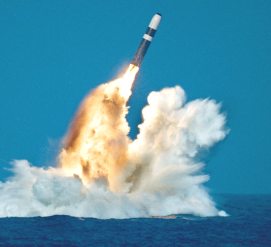 behind it the immense threat of the nuclear bomb, which I suppose you could liken to hell. Our view of leadership, our view of how government should behave, our view of the role of the state is actually pretty messed up, and I am arguing that it is messed up because it was shaped by a very warped view of God, who mostly cares for us, but has the great threat of eternal punishment for those who don’t believe quite correctly. That is not to say that all will be part of a heavenly future, but I would say that those who pursue the way of love are actually following the way of Jesus far more than those who follow the way of their version of the truth. The truth will set us free, but the truth is: (as Belinda Carlisle – that great theologan told us) in heaven, love comes first!! So when people pray the Lord’s prayer – ‘thy kingdom come, thy will be done on earth as it is in heaven’ – this looks very little like our current practices of government or nation states and the ways they behave in the earth.
 change the way we understand everything. The glory of God is not found in might, power, dominion and sovereignty. No, it is found in his cruciform nature. And if the earth can be filled with the glory of God rather than the ‘glory of empire’, where love is the antidote to fear, joy the antedote to debt, goodness the antedote to control through law and peace the antedote to violence, then together we might begin to taste a little bit of heaven.
 reimaginingthefuture