Political Parables – The ‘Other’

I recently participated in an extremely enjoyable conversation about ‘The Parable of the Good Samaritan’ and how we read it/it reads us today. (Read or watch below).

Luke 10:25-37 English Standard Version Anglicised (ESVUK)

The Parable of the Good Samaritan

25 And behold, a lawyer stood up to put him to the test, saying, “Teacher, what shall I do to inherit eternal life?” 26 He said to him, “What is written in the Law? How do you read it?”27 And he answered, “You shall love the Lord your God with all your heart and with all your soul and with all your strength and with all your mind, and your neighbour as yourself.”28 And he said to him, “You have answered correctly; do this, and you will live.”

29 But he, desiring to justify himself, said to Jesus, “And who is my neighbour?” 30 Jesus replied, “A man was going down from Jerusalem to Jericho, and he fell among robbers, who stripped him and beat him and departed, leaving him half dead. 31 Now by chance a priest was going down that road, and when he saw him he passed by on the other side.32 So likewise a Levite, when he came to the place and saw him, passed by on the other side. 33 But a Samaritan, as he journeyed, came to where he was, and when he saw him, he had compassion. 34 He went to him and bound up his wounds, pouring on oil and wine. Then he set him on his own animal and brought him to an inn and took care of him. 35 And the next day he took out two denarii[a] and gave them to the innkeeper, saying, ‘Take care of him, and whatever more you spend, I will repay you when I come back.’ 36 Which of these three, do you think, proved to be a neighbour to the man who fell among the robbers?” 37 He said, “The one who showed him mercy.” And Jesus said to him, “You go, and do likewise.”

Footnotes:

  1. Luke 10:35 denarius was a day’s wage for a labourer

The Holy Bible, English Standard Version Copyright © 2001 by Crossway Bibles, a division of Good News Publishers.

Or Watch it here:

UnknownIt’s a parable so well-known now, it is easy to let its impact completely wash over us. For me, it and the preceding dialogue poses 3 hugely political issues (by that I
mean how we live alongside our fellow humans) rather than party politics, which I consider to be an utterly defunct system which will not deliver to us the future we are calling for. (Having said that I recognise some people feel called to change it from within, and I am particularly excited to soon embark on the wonderful Caroline Lucas’ new book, ‘Honourable Friends?’)…….

The 3 issues are as follows:

1) With whom does your allegiance lie? Jesus’ challenge is straight – Love the Lord your God with all your heart, soul, mind and strength i.e. are you about loving God and walking in the ways of love or are you about serving Caesar or religion or an oppressive regime or a particular leader or a nation-state or flag?

2) Who is my neighbour? Who is there around me that I could be helping, but am not? Who am I too busy or too important to help, to stoop down to, to embrace? Who might inconvenience my schedule or delay my journey? Who might infect me or make me feel ‘dirty’? Who am I struggling to spend myself on behalf of? And yet, who is the unexpected person doing that for me?

images3) Who is the ‘other’ that offends me? I was watching one of my favourite TV shows the other week – gogglebox – absolute genius television! One of the reasons I love it is that it gives me hope that TV, rather than simply nullify our pain, numb us to the real issues, pacify and hypnotize us to carry on business as usual, can actually inspire some conversation, cause to engage with the ‘other’ and maybe even challenge and change our perspectives! One of the shows the goggleboxers were watching, was one about a man I have in all honesty had quite a low opinion of – Nigel Farage. It was a show about him as a person, rather than his (odorous) policies. It challenged me deeply. Nearly all of the people watching him, started out with quite a low opinion of him, but came out the other side seeing him much more as a human being. It is so easy to dehumanize the ‘other’, to ridicule those we don’t agree with and create the great ‘us and them’ divide. But the challenge of Jesus is so stark in this parable. Who is the one you despise? See, they are a human being like you, and maybe not so awful as you might think. (Not an excuse to not debate awful ideas btw!).

I wonder, as we look to the future across Europe, how helpful the vilification of individuals and people groups is? Will it give us a new, love based politics? When we really allow ourselves to imagine the future, I mean really imagine it, does it involve more separation and division?

I wonder, if Jesus told this parable in the UK today who he would cast as the ‘Good Samaritan’? Maybe a male taxi driver of Pakistani origin from Rochdale? Or a school girl from London who has some sympathies for some of the ideas of IS? Perhaps a member of the EDL? PLEASE don’t mishear me. I am not for one minute suggesting that those who did the despicable acts in Rochdale, or those carrying out heinous and barbaric crimes in the middle east, be that IS (or the nation-states bombing the middle east) are “good samaritans”. But if we are not careful it is possible we tar too many people with the same brush. Interestingly, we wouldn’t have an NHS without the 11% of all our staff and 26% of the doctors who come from overseas. Maybe we (who is the ‘we’ – the UK? Europe? Humanity?) are richer together and if we allow ourselves to discover interdependence, we will find some love from very unexpected places and find ourselves embracing those we once thought “beyond the pale” (originally a phrase meaning those in Ireland who lived outside the British boundaries…..)?
Democracy Day?

UnknownSo yesterday was BBC Democracy Day. Maybe it was a wistful longing for what might have been. Democracy? The rule/power of the people in a day when the richest 1% own 99% of the world’s wealth? When the 50 richest corporations now hold more wealth than the 50 richest nation states? When we hear of unbelievable governmental cover-ups across Europe? When the vox populi is increasingly silenced and the powerful elite rule through a feudalistic system of land ownership and the ‘rights’ to resources.

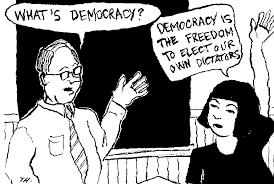
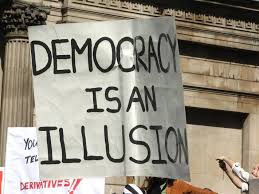
Democracy is only a veneer. It is the icing on a cake, which is mouldy to its middle. It is, as my friend Roger Mitchell so clearly highlights, just enough multiplied sovereignty to make us believe we have power when in fact we have very little. Rather, we have an increasingly oppressive and sinister system of domination and control, held together through a strong alliance of economic debt, military violence and law (truly enforced by the State of Exception – Giorgio Agamben).images

And we are waking up to this. This is why we see the political turmoil stirring throughout Europe. And the politicians cannot understand it. There is no doubt, that we will see a kick back and a reaction towards the extremes of left and right. But this is not the answer.

I quite admire the Australian system in that they have to vote. But I especially like the option to vote for ‘none of the above’. I don’t hold hope in any of the political parties, because the system itself is utterly broken, corrupt to its core and does not serve the future of humanity and the planet.

But if we do see a shaking, and the political systems we have known become shattered and changed, with a new type of economics coming to the fore, what is it that we can imagine? With power comes responsibility. What would we dream of and what would we do differently? How would we stop exactly the same thing happening again or stop our selfish motivations from plummeting us into war? What would be our ‘new politics’?

There are some exciting conversations emerging. We do not have to spiral into years of violence and war. A revolution of love is possible. I believe it is in the very heart of God for human beings to love one another and to prefer each others needs. To embrace and to be changed by ‘the other’. Our current politics is one based on fear. Fear of the other. Fear of lack. But love drives out fear and those who live in love, live in God. Fear enslaves us but love sets us free.

imgresMaybe we will see a ‘kenocracy’ emerge? A rule of love? To find this would be to align ourselves with the story of God through the ages. Love poured out for others, daring to embrace those different from ourselves and together finding hope and peace. Fear enslaves us but love sets us free.

Have a read of ‘Discovering Kenarchy’ – available from amazon. Once our imaginations are alive with possibility, nothing is impossible.Unknown

Lessons from Valencia for the NHS

I recently had the privilege of accompanying a team from the NHS in Morecambe Bay to IMG_3208Valencia on a study tour about other models of healthcare. Spain has a NHS, inspired by and designed on the British version – it is held very dear in the hearts of the Spanish people. Spain is in a far deeper economic crisis than the UK and so it is asking some tough questions about the future of the NHS there. We need to do that here too. I was challenged in my thinking and learnt absolutely loads.

Here in the UK, I believe we need to do some brave experiments in order to create together a health system which continues to be free and accessible for all, excellent in its practice, and sustainable for the future. What I saw in Valencia could not simply be transported into the UK, but there is much to be inspired by.

1) We need a paradigm shift in our thinking about health. The Valencians are not shy in talking about the need to engage their community in health care. There is a huge investment of time and resource made in partnering with schools, teaching children and young people about healthy eating, how to cook and having healthy lifestyles. Health promoters in the community work in all kinds of settings from toddlers to diabetes cooking classes. They have embraced the Bechampian philosophy that if we promote health, disease will remain far away and they are therefore able to have less hospital beds and shorter hospital stays. This is in great contrast to the Anglo-American view ala Pasteur, that we can live how we want, but immunise ourselves to the max and kill off disease when it comes. The Valencians are also further ahead in their thinking about where people should be cared for. Their home care teams and investment in community nursing enables people to be cared for at home more efficiently.

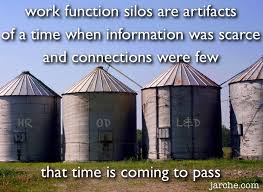
images2) Breaking down silos and integrating the care. In the model we studied, there are no separate trusts – it is all one. This allows a full integration of the clinical teams to be able to work in a variety of settings, breaks down communication barriers and causes a wonderful sense of togetherness and collaboration. Staff morale is extremely high (it’s not just the tapas and siestas) as is patient satisfaction. Image from jarche.com

3) Breaking free of centralised power structures. The Valencian system has a unique funding model, which allows them to be free of centralised government. There is still a good system of accountability in place, but a single payment per patient, adjusted according to levels of deprivation and a few other factors allows greater flexibility in care. Interestingly, this model costs less to the government than other models in Spain and is still managing to run at a 26% saving! It would be made far more complicated if the silos were still in place.

4) Using smarter IT. They have a completed integrated IT system across the health sector. So, for example, if I want to refer a patent with complicated renal failure to a nephrologist, I would include this in my consultation and link the consultants name to my consultation via an email. The consultant would then be able to access my notes and email, decide what further tests are necessary, sort them out, see the patient and then any notes she makes and changes to medication would automatically appear in my medical notes also!

5) Investing in diagnostics. For a population of around 300k, they had 17 consultant radiologists! They believe patients want early diagnosis so that clinic appointments can then be arranged according to clinical need. GPs also have far greater access to scans, which cuts down on waiting times hugely and because there is far greater relational team working, a GP can email the radiologist to ask for a certain scan, they have a discussion, work out if a different type of imaging might be better and sort it out for the patient. We have similar possibilities here, but they are far more clunky and more time-consuming.

6) Better team working. There is a lovely relationship between the hospitals and the community settings. Consultants come out into the community to do clinics in a way that really works, they discuss complex cases with the GPs and talk through management options.

7) Smarter training. Nurses are trained to be able to work across the board in the community and so develop skills needed for practice nursing, district nursing, long-term condition, health visiting, etc. This enables far greater flexibility within the workforce and higher levels of job satisfaction. Also because it is all one system, clinicians can work inside and outside the hospital setting and medical students are trained to be more flexible in how and where they work.

8) Investing in community health care. Valencians do General Practice differently to us….Within this model, there are no privately owned partnerships. Rather, GPs are employees, just as with hospital doctors. This means less HR and management responsibility and perhaps less risk. Within that, they all maintain personal patient lists to keep a real sense of continuity, but work a different pattern. The day starts early and they do clinics from 7am – 3pm – all pre booked appointments. (the last 2 hours of this is for administration, so the clinics finish just after 1230h). Then at 3pm the walk-in emergency centres (in the same building) open – staffed by the GPs from the practice. Each GP does one or two 3pm – 8am shifts a month with appropriate rest built-in. The facilities are amazing with imaging on site. It’s actually not too dissimilar from the arrangement we have now with out of hours care, but is a bit more streamlined.

9) Harnessing technology. In Valencia, all patients have an app they can access, which tells them the waiting time in the A&E or in the local GP centre. Unsurprisingly this has meant less people turn up at A&E and are dealt with in the community more rapidly and appropriately.

10) Grasping the economic nettle. I went to Valencia, highly suspicious, as the model is built on a PPP (private-public partnership). A private company owns and manages this system, but is completely funded by the government. My personal politics is far to the left and so I found the notion of this nauseating to say the least. However, I was challenged in my thinking by the CEO who talks about his company being private, but with a public heart. Profits are strictly limited to 7.5% and everything else is invested back into the system. They are running on a lower budget, with less cost, higher patient satisfaction and higher staff morale than anywhere else in the region…..these are hard statistics to argue with. However, I don’t believe a PPP is necessary in order to achieve much of what they have done as there are significant risks involved with the private sector and it is an ideological objective I struggle with. Personally I would argue for a completely different type of economics altogether, but my voice is just one in an important conversation that needs to happen. One thing that I continually challenge myself on though is that business does not equal evil and state does not equal good…..this is why for me, regional government and participatory economics is of huge importance as we move forward. With the huge numbers of people who attend conversations about health in the South Lakes and North Lancs areas, I am confident that such things are possible. However, with tools like ‘the art of hosting’, they could be much more fruitful. PPPs are not the only alternative solution to what we have now. I personally love the idea of health cooperatives. Regional funding with supplemented taxation is another possibility. 

The truth is, we have to find new ways of working that are sustainable for the future, excellent for our patients and staff, and free for all to use. I hope we can learn the lessons from Scotland and learn to engage with the issues that matter. It is time for a new politics and there is no place better to start than with the NHS.