As a direct result of the new health policy, small community practices are now seeking to federate with one another so that they can now compete (with private providers) for the services they already provide. Although most General Practices in this country are run by private partnerships (which is actually extremely different to a company limited by shares – though they can absolutely be driven by the same kind of greed), all the money they earn comes through the NHS. A practice earns money by providing various services, like vaccinations and smear tests and through meeting various targets (along with target driven initiatives like the Quality and Outcomes Framework aka QOF). The money earned then pays the staff in the practice, including the doctors, nurses, other healthcare workers, managers and administrative teams. If any provider, like Virgin Healthcare, for example, can come in and now say, we will provide all the vaccinations across the county at a lower cost than these GPs are currently able to provide, it might sound like a good idea from a strictly money point of view (I refuse to use the term ‘economic point of view’ here, because we must rid the term economics of the abuse it suffers as being synonymous with money – it really refers to how we order the house!). However, what it actually does is destabilise the economy of a practice and removes key services from a local community setting, causing staff to lose their jobs. What the government really doesn’t understand though is how important it is to form relationships with patients. Taking traditional services out of a local setting breaks some key encounters that doctors and nurses have with their patients, for the sake of saving a bit of money.
With the formation of federations, GP practices are clubbing together to basically try and bid for services en mass, but still provide them in the same way. It’s a colossal amount of work, but is also sadly going to break what has been until now a strong value within the General Practice community. As practices choose to federate with one another they basically have three choices in forming these new companies (and they do have to be companies in order to compete with the companies limited by shares whom they will be bidding against). Their first option is to become a company limited by shares themselves. The share holders would initially be the practices in the federation. In the short term, practices would chose what to do with the profits. One would hope, as they are providers of healthcare for the local community, that they would chose to invest the profits back into the health needs of their population. It is my opinion that to do anything else would be wholly unethical. To seek to make a personal profit from tax payers money, rather than using that money for the benefit of those who need it more is, to my mind, wrong. The other significant drawback of this kind of approach is that in a few years time, GP’s could choose to sell these companies at a profit and make a tidy sum in the process. In essence then, this could make a federation/company limited by shares no better than the wolves they are trying to protect the sheep they care for against. The second option is to become a Community Interest Company. This still allows profits to be made, but tends to safeguard those profits for the sake of the community. As with any legal entity, loopholes can be found to make a CIC look ethical on the outside, but actually allow large dividends to be paid to the ‘directors’ (who would be the GPs). However, one would have to chose to change the original constitution of the federation set up on this basis in order to do this, and so on paper a CIC is more likely to act more ‘ethically’ than a CLC (company limited by shares).
The third option is a potentially kenarchic alternative. Kenosis (to pour out) is one of the root words within kenarchy. However, one can be kenotic, without being kenarchic. It is possible to be a kenotic CLC or CIC, but the power dynamics do not really change. Power is maintained and held by the few and although they may seek to act benevolently, they are not relinquishing their (wrong kind of ) power. Now, power is not wrong. We have power to bring about change. However, power is very distinct from leadership. We need good leadership. But true leadership is able to allow itself to become powerless. True leadership becomes the servant so that the ‘other’ can be fully built up and truly become all that they can be. Jesus was so radical when he talked about leadership. Let us dispel the myth, that the best way to change the system is to get into the top jobs and change it from the top down. For a start, very few will ever manage to ‘get there’ even if ‘getting there’ were a good methodology through which to effect change. The sad truth is, that in aiming for the so called top jobs, much is compromised on the way, and once in the places of power, one can become utterly impotent to effect any change at all. It will also be discovered that the top jobs are really only puppets on the strings of the economic and political higher or ruling powers of the systems.
The third way is the way of co-operatives. Co-operatives give the opportunity for a radical overhaul of power, a true sharing of resource and gift and a letting go of unfair monetary advantages created by our current systems. It means the few let go of the power and benefits and instead everybody is able to share them. In forming co-operative federations (and this can apply for all practices as well – something that would be wonderful to see) there is the choice to allow all staff to become share holders together, not just the doctors. In areas where this happens (like the John Lewis Partnership or Surrey Central Healthcare or the health cooperatives of the Basque region) there is an extremely high sense of morale amongst the staff and high patient satisfaction rates. This is because of an uncomfortable truth for the powerful. It is co-operation and not competition that drives up both happiness and excellence. Of course it takes more time and effort, but relational working is so worth it and the benefits to all far outweigh the costs. However, we can more radical than just all workers being members of the co-operatives. All members of a local population could be members of a co-operative for health and this could then easily expand into education also. A greater sense of interconnectedness and less abuse of the service provided would be far more likely in such a scenario. We have to ask ourselves just how much power we are willing to give away, how much we want to know and love one another, but also to be if we want to be known and to be loved?

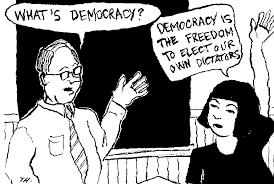 So yesterday was BBC Democracy Day. Maybe it was a wistful longing for what might have been. Democracy? The rule/power of the people in a day when the richest 1% own 99% of the world’s wealth? When the 50 richest corporations now hold more wealth than the 50 richest nation states? When we hear of unbelievable governmental cover-ups across Europe? When the vox populi is increasingly silenced and the powerful elite rule through a feudalistic system of land ownership and the ‘rights’ to resources.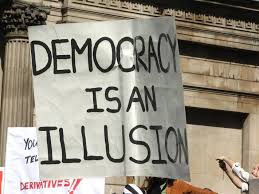
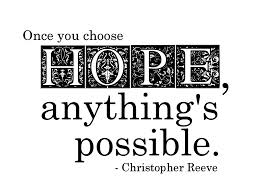 Maybe we will see a ‘kenocracy’ emerge? A rule of love? To find this would be to align ourselves with the story of God through the ages. Love poured out for others, daring to embrace those different from ourselves and together finding hope and peace. Fear enslaves us but love sets us free.
 reimaginingthefuture