
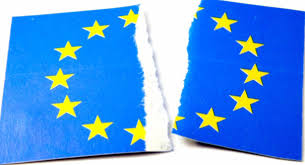
 It is no secret that I voted to remain in the EU. All 3 generations of my family, who were eligible to vote, also voted to remain (and my kids would have voted the same way, had they had the chance – under no parental pressure, you understand!). And yet, as my long departed Nanna would say (the one, who knew all the names of her grandchildren after her stroke, except mine, and called me, Edith!)…. “Well, here we are….”
Here we are indeed. I am disappointed and sad, but here we are. We have some deeply painful and complicated times ahead of us, but for those of us who voted to remain, what we must not do is retreat into a finger pointing woundedness that is willing to embrace the ‘other’ in Europe, but the reject the ‘other’ in the UK, who felt that Brexit was the way to go. No. In a world where we long for a positive approach to peace, for reconciliation under-girded by our first value to love one another, we must hold ourselves to account and dig deep to remember who we are and what kind of future we want to build together.
There are some really really important conversations for us to have right across the UK that will help us to face up to and heal the wounds we have exposed. Both sides of the debate over the EU have some significant hurts and many of them go deeper than a simple in/out referendum could ever address.
So, how do we engage together and have conversations with people from different sides of the dividing line about what kind of UK we might see develop? What might we reimagine together? Is there a hope of a Union left? Here are some things that I would like to explore in some upcoming blogs and see what conversations emerge:
 Ontology – what?! Yep – in the end, so much of who we are and how we live, what we align ourselves with and how we would choose to shape our future together depends on this. Basically – why are we here? What is our purpose? We need to understand this at an individual and a corporate level. As I have suggested in my other blog (www.reimagininghealth.com) our health and wellbeing actually depends on having a life that aligns with this sense of knowing why we are.
Theology and Philosophy – what?! Yes – again, so much of our life in this nation and  certainly our politics is under-girded by things people have/have not believed about God and his/her interaction with the world. Whether you are a person of faith or not, it is difficult to deny that for good or ill, the geopolitical worldview of the West has been hugely shaped by the partnership of church and empire over the preceding several centuries. This area of thought and study especially shapes our understanding of ‘Sovereignty’.
Economics – this is more obvious. How we choose to “order our house” has huge  implications of how we then live in the world. David Cameron tells us there is ‘no alternative’ to the Neoliberal economic agenda with its reliance on the ‘benevolent’ free market, competition, privatisation, biopower and austerity. And whether the UK or the EU is the worst proponent of this, I’m not sure, but perhaps other options are available to us. Maybe we don’t need to have an ever widening gap between the rich and poor. Maybe we don’t have to have a London-Centric (or even with the emergence of a Northern Powerhouse, a Liverpool-Manchester-Leeds-Centric) economy. Does our economy always have to grow? If it does – what does this mean for the creation of a peaceful world or our ecosystems? Isn’t it high time we had a good hard look at what our policies are doing to the world we live in, or demand in terms of war and self-protectionism? I recently trained as an executive coach – I can tell you for sure, there are always options…..it is a lie to say that we have no alternative. We do. We can have a fairer society and perhaps it’s time for us to say to the corporate giants who threaten us that they will up and leave if we don’t give them enormous tax breaks and turn a blind eye to their greed, that we will find a kinder way of being without them. There are options open to us of renationalisation of some things, co-operatives, credit unions, gift economies, time banking and many other things explored by top economists, which the press give no voice to.
And then we have more surface issues. What about our relationship with Europe and the rest of the world now? Surely we aren’t going to believe we have some kind of Empire-like influence in the world anymore? The British Empire and Christendom are both over! So, now that we don’t have them and we’re not part of the EU – what kind of partnerships do we want with other nations?
 And what about education? Is it OK that there was such a massive split in how people voted according to what they had achieved at an academic level? Are we developing academic snobbery? Are we developing education systems where there is an understanding of important issues like the one we’ve just had a referendum about? If it wasn’t for our dinner time conversations, my kids would know nothing about the EU – but thanks to Michael Gove, they can tell me about subordinate clauses and modal verbs! There is something very wrong with that.
![5517007247_63d55ac8f5_m[1]](https://reimaginingthefuture.org/wp-content/uploads/2012/02/5517007247_63d55ac8f5_m1.jpg?w=584) For healthcare – we already know that the Brexit campaign told us a complete lie about how much extra funding would be available to the NHS. But here we are! Given our current economic policies, it is difficult to see how our Nation’s favourite brand will survive. You cannot believe in an ever shrinking state and increased privatisation and continue to have the best and fairest healthcare system in the world! This is why we need greater participatory leadership and truer representative democracy!
For healthcare – we already know that the Brexit campaign told us a complete lie about how much extra funding would be available to the NHS. But here we are! Given our current economic policies, it is difficult to see how our Nation’s favourite brand will survive. You cannot believe in an ever shrinking state and increased privatisation and continue to have the best and fairest healthcare system in the world! This is why we need greater participatory leadership and truer representative democracy!
Ecology, peace-making and so much more need to be the discussions around our kitchen tables, on our walks and in our cafes and pubs. Enough of the hypnosis by our media! Let’s find each other again, heal our hurts, listen, seek to understand and together find solutions for how we are going to live in this world. Here is to a future of love, hope and peace. I will explore some more of this in the coming blogs.
 reimaginingthefuture