Sacred Economics – Gift 2

Eisenstein uses his opening chapter on Gift to set a contrast for the rest of Part 1 of his book. He is introducing us to the notion that economics and the use of our money, in particular, is a sacred thing.

Charles paints a picture using the natural world around us to challenge the perception that evolutionary biology is a cut throat, competitive business , which is all about survival of the fittest, driven by our “selfish genes”. He argues that in nature, “headlong growth and all out-competition  are features of immature ecosystems, followed by complex interdependency, symbiosis, cooperation and the cycling of resources.”

The violent, competitive, growth-driven, accumulative, oppressive, marginalising and hoarding economic of today is an aberration. It is time for humanity to enter a new phase of life. It’s grow up time! “Money may not disappear anytime soon, but it will serve a diminished role even as it takes on more of the properties of the gift. The economy will shrink (do not fear this!) and our lives will grow!”

It is crazy that money was originally a means of connecting gift with need. Yet now we often find ourselves in deadening jobs out of economic necessity, with crazy phrases like “I can’t afford to do that,” or “the cost of living is so high.” But CE goes to town on this! “Our purpose for being, the development and full expression of our gifts, is mortgaged to the demands of money, to making a living, to surviving. Yet no one, no matter how wealthy, secure, or comfortable, can ever feel fulfilled in a life where those gifts remain latent. Even the best paid job, if it does not engage our gifts, soon feels deadening, and we think, “I was not put here on earth to do this.”

The day of falsely separating our world out is over. There is no sacred/secular divide, everything we do and touch is sacred, because life is sacred and we need to start viewing both work and economics as truly sacred things. In the next blogs I will explore what Charles calles the ‘Economics of Separation’, its main components and how it has landed us in the mess we find ourselves in.

When we stare the beast in the face, we will see that we are tired of its ugliness and want to be part of a movement that is far more creative and beautiful. Surely, we do not want to align our lives with something which causes devastation and destruction but rather that which perpetuates life in all its fullness. We are tired of being commodities, we want to be gifts. The way we use money will form a part of this story, as we recover together a new economics for a reimagined future of reconciliation and peace. If we begin to choose to enter the economy of gift then surely every mountain can made low and every valley raised up – an economic level playing field, where lambs can play with lions!

Reimagining Money aka Sacred Economics

For a long time I have been convinced that we cannot reimagine the future if we do not redefine our relationship with money. A number of years ago I read a book by a chap called Alan Kreider in which he was talking about how we foster community. He said that the sad truth is, until we’re able to talk about money in a free and open way and sort out our finances, we can never truly learn to be community.

Since the financial crash of 2008, I have been fascinated to watch the unfolding interplay between the banking sector and the ‘political elite’. We suffered a massive earthquake, the after shocks continue and serve as a warning that more disaster is on its way; but we have an hilarious situation in which the politicians tell us that by some weird combination of printing more money, tightening our belts or spending more (depending on who your finance minister is!), punishing the poor and ‘regulating the banks’, whilst bailing them out, we  will somehow recover from this trauma, so that we can continue business as usual. But it is business as usual that caused this crisis and it is business as usual that will lead us back into one.

I have been disappointed by the lack of alternatives discussed in the public political arena. In my mind, it matters very little which party is in power, as the general direction of all of the current alternatives is towards future growth of the economy with more of humanity and the earth itself becoming fodder to the ever hungry machine. Here in the UK, the conservatives tell us that austerity is the answer, and we must particularly blame the ‘feckless poor’ for the mess we are in. The labour party tell us that actually spending more is the answer, but the responsibility must lie with the ‘greedy rich’. The liberals are lost at sea and seem to have forgotten what liberalism is, (at least for a while) and then UKIP arrive to offer the ‘heroic’ idea that what we really need is self protectionism, independence and more patriotism. Kill me now.

And yet, we remain in an amazing moment of anomy, in which many, the commons, the multitudes are undeniably calling into question meaning and purpose at a profound level. We are at the fullness of what Foucault calls ‘Biopwer’ – the commodification of life itself. And people are sick of it. People are sick of feeling like they are being eaten rEVOLutionup like bread in order to keep the economy going, to keep the targets met, to keep the debts serviced. I see teacher after social worker after nurse after builder after sales person have breakdowns in my consulting room, because they can no longer stand under the rod of their oppressors. I see managers and directors having breakdowns as they realise they are losing touch with their own humanity and for what? Is this what we were made for? Is this the best we had hoped for? But it is in these moments that we must allow the songs of ‘Les Miserables’ to become our own – “Do you hear the people sing, singing the songs of angry men, it the music of a people who will NOT be slaves again….”

There is a sound emerging in our hearts, there is a rumbling in the people, there is a hope rising in our hearts that this dog eat dog world of violence and suffering is not the future we must endure. There is an alternative. There is a possible future of peace and love, but raging against the machine and losing our voices shouting at it may not accomplish very much – at least that is what I am learning! I have ranted to myself and others many times, but what has it achieved? Perhaps a stirring of hearts, perhaps a rising of hope, perhaps a new determination that life can and will be different for the multitudes. But ranting will not suffice, nor dreaming alone. It is time for brave acts, to disregard the powers and to begin to be creative.

But our creativity must be both prophetic and practical, experimental and pragmatic. We call for a new future and we live differently. And so, we must redefine our relationship with money, not do away with it, but refine what we mean by ‘money’ and ‘the economy’. With that in mind, I want to do some blog posts on a phenomenal book I have just finished entitled ‘Sacred Economics’ by Charles Eisenstein. It gives voice to Sacred Economicsmany things I and others have thought about but lacked the understanding or language to communicate. I cannot recommend it highly enough. Charles believes in the creative commons, when it comes to copyright – (check out their website), so I am free to copy passages of his book where that is helpful, but I want to honour the brilliant work he has done. He gives a brilliant history lesson in our relationship with money, how it has led to an age of separation where community is broken down and we have lost relationship with one another and the earth, how we recover a ‘gift economy’ and how we practically move forward to “the more beautiful future our hearts tell us is possible.” I hope the coming blogs are inspirational, encouraging and practical.

The photo “revolution is taken by Tim Pierce. http://www.flickr.com/photos/qwrrty/6209634263/

The Problem with Dreams

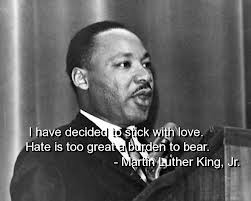
If we are to reimagine the future, we must allow dreams of a different future to penetrate our subconsciousness and impregnate our thoughts and subsequently our actions with new possibilities. As many across theMartin Luther King world have reflected on the remarkable life of Martin Luther King in these past days, and read again his phenomenal speech of his preferred future, his dream of a different life ahead, of justice, forgiveness, togetherness, friendship, equality and love; I have been struck by the power of the actions that began to make that dream a reality. The kind of loving actions which are tough and unwavering in the face of injustice. The kind of loving action which does not lie down and take it, but turns the other cheek, demanding love on an equal footing.

I have been thinking about what our dreams might be for the future. After all the debate in the USA over gun control, we find it easy to make crass judgements about a culture we don’t fully understand. We happily point the finger, whilst the UK government continues to make appalling investment in the arms trade and nuclear weapons. It makes us feel better to focus on ‘the other’ and their problems. But which of us dreams of a future of violence? We say we want peace, but do we? Is enforced peace really peace, or is it a fear based behaviour? True peace involves taking our weapons and transforming them into tools for goodness.

Martin Luther King 2If we dream of a different future, how many of us are willing to change the way we vote around that issue? How many would refuse to vote for a party which supported any arms agreement or nuclear armament? How many more of us could rise to the great protests on the streets? Why do we not hear more political debate on real alternatives to the armed forces and to war? The problem is, deep in our psyche, we still believe peace comes through control, violence and dominance rather than through violent love. We may believe this is how God operates and so if we’re the ‘goodies’ built on ‘good foundations’ it justifies our violence…….

The gun lobby argument that the weapon makes no difference is ridiculous. The more we arm ourselves with weapons of violence, the more likely we are to use them to do violence. I don’t just dream of  people laying down arms in the USA. I want people everywhere to lay down their arms. I believe this is a dream of most people. I think the challenge to us is this: what are we going to do differently to make the dream a reality?