
Here are some thoughts on Political Structures and the Economy:
Political Organisation
I would want to legislate Proportional Representation for a fairer reflection of the political will of the people, with coalitions becoming the norm, leading to a more collaborative and conciliatory form of politics, involving real engagement with and empowerment of local people in their communities.
Political conversations in local communities will mean that politicians and public servants do not come up with good ideas and “do things to people”, but rather learn to form environments of participatory leadership where co-commissioning becomes the norm. “No decision about me, without me, is for me.” (Leeds Poverty Truth Challenge). This is part of the new politics we need.
Sovereignty can be understood in several ways. From my perspective there are two competing narratives that frame the debate. Sovereignty can be the right to self-govern, to be in charge of our own future and rule in such a way to ensure that this happens – that is to insist that our own freedoms matter the most and we may have to suspend the freedom of others to ensure this happens. The alternative view of freedom is rooted in the idea of ‘essential kenosis’, i.e. that true sovereignty is not the domination of the other, but a self-giving, others-empowering love. I would see this latter definition of Sovereignty to be the basis of a more human kind of leadership. Leadership is something which is from among, rather than something which is lorded over others.
I would continue with town and county councils run on this basis, with two nationally elected houses, one based in the north and the other in the south.
Economy
I would start with the breaking up of banks into smaller, regional units, encouraging a multiplicity of options, especially encouraging credit unions and cooperatives. This is a well thought through idea of what to do with RBS, as championed by the New Economics Foundation. This will ensure local lending for local people, businesses and initiatives which will lead to a more sustainable system, more similar to the German or Danish model, both of which have ridden financial storms more easily than those where larger and centralised banks are allowed to dominate the market.
there needs to be a recognition that in all of economic history that we know of, only 3 countries have ever been in surplus and each case this was in a very unusual circumstance and for a short time. The obsession with balancing the books is a nonsense. (A national economy is nothing at all like a household! For instance, we do not have a bank in our back gardens that can print money, nor do we have rich friends living with us, to whom we give special privileges whilst making others work for very little pay, refusing to help them out, but rather telling them they need to have better aspirations and work harder).
A fair society involves creating local environments in which people can work and work pays well, so that a hard days work does not still leave someone unable to afford food, shelter and warmth. A fair society means that when you are unable to work or go through a time of hardship, you will be cared for appropriately. We would encourage the formation and strengthening of unions on this basis.
We need an economy that does not allow organisations to have their headquarters in the UK, but put their profits into other nations, whilst avoiding their fair share of taxation. The UK has many reasons to attract companies here, other than low tax rates and if companies wish to hold the UK to ransom, they can go elsewhere. Instead we will build relationships with those companies that will pay a fair and living wage, ensuring a fair share of profits and contribute to the wellbeing of the economy. Trickle down neoliberalism is failing the vast majority of people, and so we will develop this new economy together.
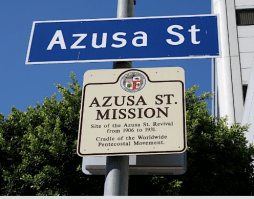 110 years ago last weekend, there was a phenomenon that occurred at Azusa Street, Los Angeles, which saw the birth of the Christian Pentecostal movement and forever changed the face of global christianity and society as a whole. In the gatherings and prayer meetings that happened during this time, many people encountered the egalitarian love of God and were utterly transformed by it. In a day and age in which there was still an utter domination of Black men and women by Whites and the general degradation of women of all colours and backgrounds, something incredible unravelled. Suddenly, men and women, blacks and whites found themselves to be equally loved, equally honoured and equally transformed. Sadly, within just a couple of years, much of this free and radical move of God, this outpouring of the Holy Spirit, had become commodified and controlled with the separation of men and women, black and white as entrenched as ever.
 unstoppable. It is without doubt, that one can trace this awakening force all the way through to the bravery of Rosa Parks and the peace-fuelled dream of Martin Luther King. But, I want to argue that between the early 20th century and the time of the Civil Rights Movement, a virus had infected the movement that has ultimately led to it being ineffectual in creating a truly egalitarian society.
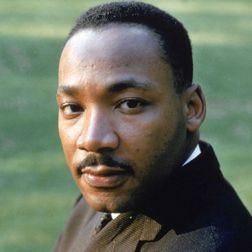 Sovereignty through a leadership of domination and control, meant that rather than creating a new dance, to which all could be invited, it was believed that it was only through the positions of power that one could affect change. So, the contemporary critics of MLK may have been onto something when they said that he should not be knocking on the door of power in order to be part of the white man’s game. Rather, the movement could have found a new way of being that they invited all, including the powerful to join in with.
 ace in many ways). Not because his motives were wrong. Not even because he was naive. No, the truth is that real change doesn’t happen from the top. The positions of power are incapable of making the changes that many long to see. Generally the positions are filled with good people, but they find that the power they thought they might have is utterly impotent. They are actually powerless to do the very thing they were elected to the office to do! Otherwise, we would have implementation of Obamacare, and many other injustices put right…..only we are seeing the very opposite of this occur on both sides of the Atlantic.
 We are hearing a lot about ‘sovereignty’ these days, especially in the current debate about Europe. We are particularly told by the ‘brexit’ campaign that leaving Europe will give us our ‘Sovereignty’ back as a nation. We will be able to make our own laws and do things the way we want them to be done. And yet sovereignty usually means the empowerment of the few, something that absolutely must change.
 The cross is not about the need of an angry Sovereign God to be appeased, but rather the love of God utterly dismantling humanity’s understanding of what it means to be sovereign. So much therefore for ‘Sovereign decisions’ that disregard the need of our fellow humans. So much for the desire to be self-ruling and governing.
 self on the cross. Not just our own ‘Sovereign’ ways of behaving with a capital S, the thoughts and actions that demonstrate our own need to be in charge, but the things we do as humanity collectively that bring such destruction to ourselves, our relationships and the world we live in. We wrote many things down on scraps of paper and pinned them to a wooden cross (words like selfishness, greed, the arms trade, nuclear weapons, starvation in a world of plenty etc). And then we burnt the whole thing, representing to us the way that his love consumes and overcomes all of these things. It is finished. That old understanding of Sovereignty is done with. True sovereignty is to walk in the way of uncontrolling love (Jay Thomas Oord) and has nothing to do with violence, debt, control, power games or self-preservation.
 wish to do so collectively, we could perhaps think more carefully about what will happen when we act in a ‘sovereign’ dimension toward others….As english people, we are going to struggle with our own sense of sovereignty, because we have had the biggest empire in the world and have a long history of grand monarchy. At Easter, we could do worse than to reflect on the humility and grace of the cross and allow our hunger for autocracy to be utterly undone.
 reimaginingthefuture