
I recently participated in an extremely enjoyable conversation about ‘The Parable of the Good Samaritan’ and how we read it/it reads us today. (Read or watch below).
Luke 10:25-37 English Standard Version Anglicised (ESVUK)
The Parable of the Good Samaritan
25 And behold, a lawyer stood up to put him to the test, saying, “Teacher, what shall I do to inherit eternal life?” 26 He said to him, “What is written in the Law? How do you read it?”27 And he answered, “You shall love the Lord your God with all your heart and with all your soul and with all your strength and with all your mind, and your neighbour as yourself.”28 And he said to him, “You have answered correctly; do this, and you will live.”
29 But he, desiring to justify himself, said to Jesus, “And who is my neighbour?” 30 Jesus replied, “A man was going down from Jerusalem to Jericho, and he fell among robbers, who stripped him and beat him and departed, leaving him half dead. 31 Now by chance a priest was going down that road, and when he saw him he passed by on the other side.32 So likewise a Levite, when he came to the place and saw him, passed by on the other side. 33 But a Samaritan, as he journeyed, came to where he was, and when he saw him, he had compassion. 34 He went to him and bound up his wounds, pouring on oil and wine. Then he set him on his own animal and brought him to an inn and took care of him. 35 And the next day he took out two denarii[a] and gave them to the innkeeper, saying, ‘Take care of him, and whatever more you spend, I will repay you when I come back.’ 36 Which of these three, do you think, proved to be a neighbour to the man who fell among the robbers?” 37 He said, “The one who showed him mercy.” And Jesus said to him, “You go, and do likewise.”
Footnotes:
- Luke 10:35 A denarius was a day’s wage for a labourer
The Holy Bible, English Standard Version Copyright © 2001 by Crossway Bibles, a division of Good News Publishers.
Or Watch it here:
 It’s a parable so well-known now, it is easy to let its impact completely wash over us. For me, it and the preceding dialogue poses 3 hugely political issues (by that I
mean how we live alongside our fellow humans) rather than party politics, which I consider to be an utterly defunct system which will not deliver to us the future we are calling for. (Having said that I recognise some people feel called to change it from within, and I am particularly excited to soon embark on the wonderful Caroline Lucas’ new book, ‘Honourable Friends?’)…….
The 3 issues are as follows:
1) With whom does your allegiance lie? Jesus’ challenge is straight – Love the Lord your God with all your heart, soul, mind and strength i.e. are you about loving God and walking in the ways of love or are you about serving Caesar or religion or an oppressive regime or a particular leader or a nation-state or flag?
2) Who is my neighbour? Who is there around me that I could be helping, but am not? Who am I too busy or too important to help, to stoop down to, to embrace? Who might inconvenience my schedule or delay my journey? Who might infect me or make me feel ‘dirty’? Who am I struggling to spend myself on behalf of? And yet, who is the unexpected person doing that for me?
 3) Who is the ‘other’ that offends me? I was watching one of my favourite TV shows the other week – gogglebox – absolute genius television! One of the reasons I love it is that it gives me hope that TV, rather than simply nullify our pain, numb us to the real issues, pacify and hypnotize us to carry on business as usual, can actually inspire some conversation, cause to engage with the ‘other’ and maybe even challenge and change our perspectives! One of the shows the goggleboxers were watching, was one about a man I have in all honesty had quite a low opinion of – Nigel Farage. It was a show about him as a person, rather than his (odorous) policies. It challenged me deeply. Nearly all of the people watching him, started out with quite a low opinion of him, but came out the other side seeing him much more as a human being. It is so easy to dehumanize the ‘other’, to ridicule those we don’t agree with and create the great ‘us and them’ divide. But the challenge of Jesus is so stark in this parable. Who is the one you despise? See, they are a human being like you, and maybe not so awful as you might think. (Not an excuse to not debate awful ideas btw!).
I wonder, as we look to the future across Europe, how helpful the vilification of individuals and people groups is? Will it give us a new, love based politics? When we really allow ourselves to imagine the future, I mean really imagine it, does it involve more separation and division?
I wonder, if Jesus told this parable in the UK today who he would cast as the ‘Good Samaritan’? Maybe a male taxi driver of Pakistani origin from Rochdale? Or a school girl from London who has some sympathies for some of the ideas of IS? Perhaps a member of the EDL? PLEASE don’t mishear me. I am not for one minute suggesting that those who did the despicable acts in Rochdale, or those carrying out heinous and barbaric crimes in the middle east, be that IS (or the nation-states bombing the middle east) are “good samaritans”. But if we are not careful it is possible we tar too many people with the same brush. Interestingly, we wouldn’t have an NHS without the 11% of all our staff and 26% of the doctors who come from overseas. Maybe we (who is the ‘we’ – the UK? Europe? Humanity?) are richer together and if we allow ourselves to discover interdependence, we will find some love from very unexpected places and find ourselves embracing those we once thought “beyond the pale” (originally a phrase meaning those in Ireland who lived outside the British boundaries…..)?



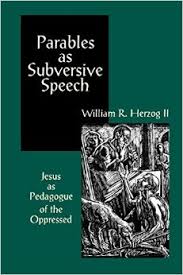
 essons I have learnt and thoughts that have provoked me as I have read.
 reimaginingthefuture