Healthcare Politics 1

1) Great health care should be universally accessible to all. I tweeted recently that I was pleased that Obama was re-elected, not because I think his politics are particularly more radical or really that different from those of Romney, but so that Obama Care could have a chance. A chap from the states tweeted back that nothing in life is free, it’s just not the ‘American Way’. The politics of Jesus is clear. He goes to the poor, the marginalised, the rejects and the outcasts. He never creates loopholes to exclude them! He treats the foreigner with dignity and cares for the unlovely. His politics are far more challenging that we would ever allow ourselves to believe! There is no toxic distinction made between the ‘deserving’ and ‘undeserving’ poor. That is a repulsive notion that we must not allow ourselves to be aligned with.
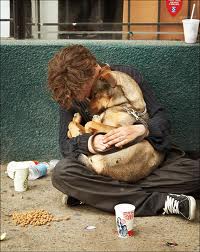
Homeless ManWhere the rich can access better healthcare more easily in the ‘christianised’ west, we need to ask ourselves how and why on earth we have let this happen – the answer is not a comfortable one. When 50 million americans cannot access health care, and a black man living in New York has a life expectancy of just over 40, also true of a homeless person living in London, we have to wonder about our priorities. You are far more likely to die young in an inner city estate from chronic disease than if you live in a middle class suburb. And that is only the health injustice in the west.

We bury our heads when we begin to think of the life expectancy of our brothers and sisters in Africa, in South America, in parts of Asia.kevin-carter-vulture We focus on increasing the life expectancy of the rich (white) ones in the UK to 85 or more, and feel a deep sense of achievement, while all the time, children die of diarrhoea (can you imagine if that happened here?), starvation, malaria, things that are genuinely and inexpensively preventable?! I don’t come at this naively. I don’t think the answer is a quick fix, but there is a kenarchic challenge – to those whom much is given, much is required. So often we hang on to human rights, and make them about me and my rights. We want to become our own mini emperors, where we demand the best for ourselves and the self protectionism sadly drowns out the cry of others. The truth is, we don’t need to make healthcare everywhere worse for good health care to happen everywhere for everyone.

However, we need to allow ourselves to be uncomfortable about the amount that is currently spent per head on healthcare for a wealthy child compared to a poor one…….we need to find new ways to protest, new ways to give, new ways to redistribute resource. But we cannot remain silent and we cannot do nothing. We cannot be like the fat cats who sing our happy songs and forget about justice for the poor. The millenium development goals are now, sadly, a total joke, and yet we could have gone further…….we blame, amongst other things the banking crisis. This is plainly a lie. If we want to live in a way that is like God, and really see justice and mercy filling the earth we live in, then we must learn to prioritise those He prioritises.

Kenarchy and Healthcare – Paradigm

I think a lot of the time about healthcare. I guess, it’s because it’s the arena in which I spend a huge bulk of my time. I’ve studied and worked within this sphere for nearly 14 years now and it’s something I care deeply about. I think what I will write here will be helpful and applicable to other realms of work, but this is what I know, and so this is where I start – ha! though it won’t be where I finish!!

If kenarchy is about emptying out the places of power, lives laid down in loving and serving other people, then caring about the health of others is a good place to apply it! If kenarchy can be applied to our paradigms, praxis (or politics) and person, then wherever we work, whatever we do, we can use its lens to help us get some focus in each of these areas.

Were I to try to blog all in one go on a kenarchic paradigm, politic and the personal impacts on healthcare, then this could end up being the longest blog post in all of history! So I will break it down into the three subsections, starting with a kenarchic paradigm (the way we see the world). This is big picture stuff and doesn’t massively deal with specifics! For some, these thoughts are nothing new, for others I hope they spark challenge and debate!

Paradigm (with some politics thrown in for good measure!)

These are some initial thoughts on how my thinking about health care has been shaped in terms of the big picture.

1) Great health care should be universally accessible to all, and all should have access to the same standard of excellence, love, and care. I do not see health care as something which is earned or a privilege, but something which is freely given. Of course there are economic implications here, but perhaps if we stop thinking in terms of an economy of buying and selling (trade) and rather think of services that are given and received (exchange) then this may help us. It also questions the huge drive to privatise healthcare, in which money and profit are dangerously the motivating factors, rather than equity. Many of political philosophers writing currently, are calling for a new moral foundation or frame-work from which to establish new ways of being and living. The kenarchic basis here is that God is love and God is healer. God calls us to be like him and we too are therefore to be those who primarily function out of love and to be those who bring healing. Freely you receive, freely give…..

2) As my great friend, Roger Mitchell says “all knowledge is relational”. Too often, especially with intellectual copyright laws and big pharma, knowledge is power. But it shouldn’t be. If we gain knowledge, it is for the benefit of others, for their empowerment, for their betterment. That doesn’t mean there isn’t expertise, or specialism, far from it. We need one another’s knowledge, to honour and draw on one another’s gift, but if we hide it when it could help millions of people, or focus our knowledge on helping those who can pay us most, we need to question our humanity. So much of what we do in medicine, is a symbiotic relationship of learning and teaching. ‘Knowledge power’, just like any power, is not there to be lorded over others or enslave them to us in any way, rather it is for the service of others. An uncomfortable challenge. Knowledge needs wisdom for it to be used properly. The wisdom of God is found in a cross, where the human one, Jesus, gives his life in ‘foolishness’, refusing to bow to the status quo or powers that “know what to do”….but when we keep knowledge for our selves, or use it to make ourselves look clever and wonderful in the sight of others…..we are being less than human…..

3) Health care is diverse. Health care is not just about curing people. It involves some curing, but also some discovery, some therapy and some suffering with others over long periods of time. It is mental and physical and spiritual. It is natural and supernatural. It is about helping people to live well, die well and choose well. We must be very resistant to that which commodifies it into being about cures and results. We need to ensure we honour and use the vast breadth of care available especially for those, who don’t make financial sense or produce obviously fast results!

4) Healthcare is most effective when there is collaboration in place of competition. Time and again studies show that where teams work together to bring out the best in one another and collaborate together, outcomes are far better and those working are far happier than where competition is used as the model. The Kings fund and others have done so much work into this, and there is little else to comment on.

5) Healthcare is service. It is not about profit, or glory or self promotion. It is about serving people. That’s why I love that the health system we have in the UK is called the NHS. Working in this environment should remind us what we’re here for and what our motivation is.

6) Universal healthcare is affordable. It is a complete myth and a lie that we couldn’t afford to give good health care to every one on the planet. We make ridiculous choices as humanity to destroy one another, when we could be living very differently. Healthcare for everyone does not mean poor health care for everyone. Here is a brilliant TED talk by a truly excellent thinker, Thomas Pogge.

7) Healthcare involves joined up thinking and new partnerships emerging. We are stuck in a crazy cycle of a lack of joined up thinking between so many aspects of life and the economy. Plenty of examples of this in the next blog……but for example, health, education, international development, media, sport, as a starter for 10!

My hope is to take these 7 paradigms of kenarchic healthcare and apply them politically and personally……As it says at the top of my blog, when paradigms change, the world changes with them……

Reimagining Barrow-in-Furness

An odd title, maybe, but bear with me!

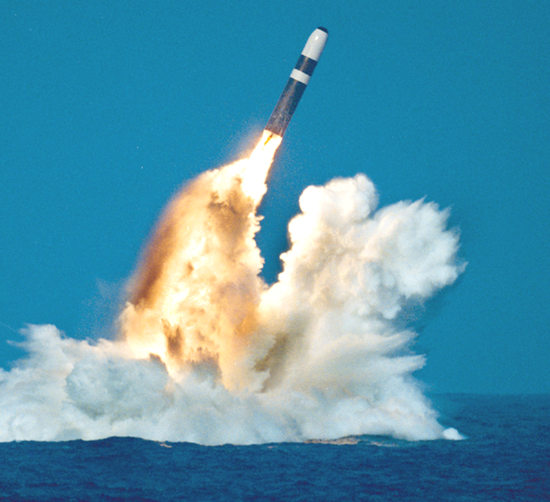
Barrow’s future, it would seem has been hanging in the balance of late; awaiting The copyright on this image is owned by Chris Upson and is licensed for reuse under the Creative Commons Attribution-ShareAlike 2.0 license. a decision from the powers that be as to whether or not we will recommission Trident, the UK’s nuclear submarines. The arguments for continuing with the Trident project are, at best, unconvincing, but I have been wondering to myself what the people of Barrow think about it all.

One one level it means jobs and economic growth for the area over the next couple of generations, in an area that has been impoverished and forgotten with high unemployment and an increasing sense of isolation. But I wonder what the people of Barrow would like their legacy to be. unclear about copyright on google imagesI wonder if in their hearts the people of Barrow would really like to be known for creating that which has the capability to destroy whole cities? I wonder if this is what they feel born for; if this is what they would love to be remembered for; if this is what they would like the ethos of their town to be about?

What if trident is not recommissioned? What then? I wonder what would happen if the people of Barrow were able to get together and reimagine together what their town is about and what it might become. I wonder what dreams are hidden in the hearts of the people there. I wonder how they might choose to do economics differently or whom they might like to prioritise. I wonder how they would enable each other to have a sense of fulfillment in life and what their vision of the future might look like. I wonder what their gift to the surrounding communities, the nation and the nations might be if it isn’t Trident? Just because a town has been built around one type of industry, doesn’t mean it has to remain so – now that is costly for the generation still skilled in that area, but sometimes the prize of a different future is worth the cost we incur now. There are a bunch of blogs from the Barrow area that would imply a different future is preferred…..

I was recently with a bunch of friends and we were thinking through the process of reimagining the future, in line with a concept, which I love, called kenarchy – more on this another time. We came to the conclusion that in order for a community of people, in any given area of life, to be able to reimagine the future and move towards a kenarchic way of life, there may be three things which need addressing. Firstly the paradigm or worldview, under which we operate. Secondly our politics or praxis – how then shall we live differently? And thirdly, personal changes and development – people being able to become who they would most like to be, at their best; and what they might therefore do differently.

Jesus said some interesting things about who God prioritises – namely – children, orphans, women, the poor, outcasts, foreigners, widows, prisoners and the sick……I was just wondering how many of the places we live reflect similar priorities and what they might look like if we did? I was wondering what Barrow-in-Furness would look like and grow into if the people chose these kind of priorities instead of those of destruction and violence……?