Healthcare Politics 3a

3a) Healthcare is diverse

We are in danger of making healthcare too narrow in our understanding. Here are a couple of posts on its vast spectrum!

Healthcare is in part about curing people.

Cure involves quick access to urgent care for all people of all backgrounds and need. I know of some great emergency departments and I know of some that I would never want to be admitted to (and some of those are ones I have worked in!). And the difference is not usually to do with levels of expertise (although sometimes this is the case), but far more to do with the morale, ethos and culture within the department. Where the staff are cared for, nurtured and supported, I guarantee the care they give is excellent. Where there is a  top down, bullying approach to management with a culture of lying and blame, I promise you, the care is less than good……We need those departments to be filled with caring, patient-centred professionals, who are able to hold compassion at the fore when pressure and circumstance squeeze them from every side, so that people receive excellent care.

Cure is also about having access to affordable drugs and other treatments like surgery – and not just here, but everywhere….in the USA, where the pharmaceutical industry holds far too much power, and uses it to dominate, rather than serve and benefit others, especially the poor, many drugs are inaccessible. Surgery is too expensive, due to corruption in insurance. I love the way people movements, like those spoken of by Shane Claiborne in the ‘Irresistible Revolution’, are providing alternatives to the greedy insurance companies and challenging the ethics of these often appalling empires, who crush the very ones they are trying to help. Surgery made possible, by the generosity and sharing of others. If you haven’t already done so, get involved with #nicsfight, here in the UK.

And then there is the minefield of cures being deliberately withheld from the developing world because they do not make financial sense…..I listened to a fascinating talk by a lady called Landa Cope recently who challenged this concept head on. She said that the areas in which to invest, if you want to see the biggest growth and return are actually among the poor…….but our motivation must be love not financial gain……but for those motivated by money, the health impact fund and a rethink of international development policy could help!

When Jesus ‘healed’ people, there are 2 different words used. One of them is ‘Iomai’, meaning ‘to cure.’ He took time with those who needed it most to cure them. Where we have medical or surgical cures available, how can we withhold them from people who want and need them? If healing others is part of what it means to be human, as Jesus, ‘the human one’, demonstrated, again and again, then we need to make cures available to everyone. A cure is not earned, it is given! Let’s take the gifts of a cure that we have and make them available to everyone, everywhere…..

Healthcare Politics 2a

2) I do believe “all knowledge is relational”. I wrote to the secretary of state for health in the last government and suggested that we coud join up some thinking between the dept of health and the dept for international development. How often do we hear that the money given through aid has been squandered, wasted or siphoned off into some terrible and corrupt dictator’s pocket? And this then gives UKIP or the Tories scope to try and slash our aid budgets to the developing world. But, we also have a surplus of trainee doctors…..

My idea was this – instead of giving money into situations to help with health, we could give our doctors, nurses and midwives to work on an optional (rolling) basis as part of their training. We have loads of GP, surgical, medical, paediatric, anaethetistic, emergency, nursing and midwifery specialist trainees (to name but a few), who finish their training, or who get to a certain level and then cannot progress further due to a bottle neck in the system. We have some the best trained medical professionals in the world waiting for jobs. We also have, for example, the same population as South Africa, and ten times the number of doctors…….

What about piloting some schemes, where we allow relationships toimgres develop between partner hospitals and communities? We can send some of our best trained people into the developing world, paid for by a joint arrangement between the DoH and DfID. Our trainees would get some of the best experience, with on the job training available and return with richer and more diverse skills. They would build friendships and receive as much as they would give, learning about communication skills in difficult circumstances, reaching through cultural barriers and expanding their knowledge base. The host hospitals/clinics would also benefit from the sharing of knowledge and skills and therefore an increased level of expertise with which to help their communities. There would also be fresh supplies and medicines, homeprovided, for example, by the incredible work of the International Healthcare Partners or the Health Impact Fund. It is vital that such partnerships include community medicine as well as hospitals, because we need a sustainable model for the future. Plus we need to breakdown traditional views of who is ‘qualified’ to be a healthcare professional! Basic signs of illness could be taught to community members, so that the right treatment is given for the right condition. There has been some fascinating work, of late, in helping communities recognise when something is malaria and when it is not – the results have been staggering. It’s a scheme which involves partnership, honesty, sharing resources, using aid budgets in a relational and focussed way and could, I think, be really transformational! Aid that is relational and reciprocal – breaks down some of the power dynamics and utilises resource as gift. Sounds like good stewardship. The british government didn’t think so and were rude and dismissive in their reply!!

Healthcare Politics 1

1) Great health care should be universally accessible to all. I tweeted recently that I was pleased that Obama was re-elected, not because I think his politics are particularly more radical or really that different from those of Romney, but so that Obama Care could have a chance. A chap from the states tweeted back that nothing in life is free, it’s just not the ‘American Way’. The politics of Jesus is clear. He goes to the poor, the marginalised, the rejects and the outcasts. He never creates loopholes to exclude them! He treats the foreigner with dignity and cares for the unlovely. His politics are far more challenging that we would ever allow ourselves to believe! There is no toxic distinction made between the ‘deserving’ and ‘undeserving’ poor. That is a repulsive notion that we must not allow ourselves to be aligned with.

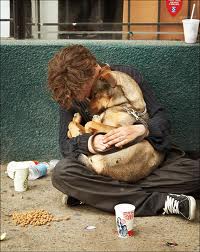
Homeless ManWhere the rich can access better healthcare more easily in the ‘christianised’ west, we need to ask ourselves how and why on earth we have let this happen – the answer is not a comfortable one. When 50 million americans cannot access health care, and a black man living in New York has a life expectancy of just over 40, also true of a homeless person living in London, we have to wonder about our priorities. You are far more likely to die young in an inner city estate from chronic disease than if you live in a middle class suburb. And that is only the health injustice in the west.

We bury our heads when we begin to think of the life expectancy of our brothers and sisters in Africa, in South America, in parts of Asia.kevin-carter-vulture We focus on increasing the life expectancy of the rich (white) ones in the UK to 85 or more, and feel a deep sense of achievement, while all the time, children die of diarrhoea (can you imagine if that happened here?), starvation, malaria, things that are genuinely and inexpensively preventable?! I don’t come at this naively. I don’t think the answer is a quick fix, but there is a kenarchic challenge – to those whom much is given, much is required. So often we hang on to human rights, and make them about me and my rights. We want to become our own mini emperors, where we demand the best for ourselves and the self protectionism sadly drowns out the cry of others. The truth is, we don’t need to make healthcare everywhere worse for good health care to happen everywhere for everyone.

However, we need to allow ourselves to be uncomfortable about the amount that is currently spent per head on healthcare for a wealthy child compared to a poor one…….we need to find new ways to protest, new ways to give, new ways to redistribute resource. But we cannot remain silent and we cannot do nothing. We cannot be like the fat cats who sing our happy songs and forget about justice for the poor. The millenium development goals are now, sadly, a total joke, and yet we could have gone further…….we blame, amongst other things the banking crisis. This is plainly a lie. If we want to live in a way that is like God, and really see justice and mercy filling the earth we live in, then we must learn to prioritise those He prioritises.