Why I’m Voting Green

Unknown-1My kids love to know who my wife and I are voting for and we want to be a family that talks about this kind of stuff around our dinner table. So we told them “this year, we’re firmly nailing our green colours to the mast”. They didn’t know what that meant, so we told them – “we’re voting GREEN”!

I’ve read a surprising amount of the manifestos of each of the parties this year. Before doing so, I was highly inclined not to vote at all as I feel the political class/system is so out of touch with real life and there seems to be little radical voice in the arena. However, I have become hopeful that the Green party really are standing for some hugely important issues and offering a real alternative.

Here is my summary of why I am voting green:

Unknown-2A New Politics – Caroline Lucas has not been afraid to challenge the status quo. I believe we must find an inclusive, love based politics if we are going to find a new and reimagined future together. I believe the Green party are truest to this hope. I also love the gentle, gracious, intelligent and firm leadership of Natalie Bennett – for me, she was outstanding in the leaders’ debate and held her nerve in the face of the ‘old boys club’. As a feminist, I am passionate about seeing women fully instated in leadership, not just ‘talked-up’. The leadership we are seeing from Natalie and Caroline is of a different order from the brash, bullying, testosterone-fuelled alternatives. Unknown-1

Healthcare – It might surprise some, as a GP that I say this, but for me the Greens have a serious and well thought through health policy. Their health policy is more holistic and more just (for those who need health care the most) than any of the other parties. I have to say, both Labour and the Lib Dems are also saying some great stuff, but overall, the Greens are willing to shift the conversation to where we need it to go – from an illness model towards promoting health and wellbeing.

Education – Our children have become commodities of the economic state. I love that the Greens are talking far more holistically and compassionately about the future of our children. Unknown

Environment – It needs hardly be said, but this issue is actually going to kill us and we need some people in government who are going to help us make some massive changes to our energy supplies and the ways we are choosing to live. Their view is comprehensive and holistic. The raping of the earth’s resources and high CO2 levels are far more dangerous than the threat of terrorism. We must face this hard truth and act now.

Defence and International Development – Here we have a dual policy that makes sense. Stop our own hypocritical nuclear arsenal and make for positive peace by tackling poverty in the developing world.

UnknownEconomy – Huge fresh creation of new jobs in making the world more beautiful through green technologies, massive investment back into the public sector and encouraging those of us more able to be less self-protective and share the greater burden of taxation, rather than crushing the poor whilst the rich get ever richer. I also like that they will hold banks and big business to better account.

Immigration – There are too many awful lies being peddled about asylum seekers and refugees. I believe in open borders and intercultural rich diversity. I believe in interdependence and love, not fear, independence and hate.

Justice – A fresh look at the criminal justice system, with a move towards restorative justice is from my perspective the only way to go.

Voting – I refuse to be told that my vote will be a wasted vote. I am fed up of the arrogance of the system that tells me there are only two alternatives. The old politics is over. We are entering the day of coalitions and finding our way to a wholly different kind of political system. I am voting Green, not to be tactical, not to be pig-headed, not out of fear, but because I believe they genuinely hold the brightest torch for the things that matter the most not for me, but for everyone. We cannot vote out of selfish self-protectionism. We must position ourselves for the future generations and the future of this planet. That is why I am voting GREEN!images

Political Parables – Free Market Economics

Unknown First of all, I listened to an awesome radio 4 show this week, which is part of a brilliant series called “Promises, promises: A History of Debt”. This week’s short program was entitled: “The International Politics of Debt” and serves as a good backdrop to challenge some of our world-view before embarking on this next parable, which to be honest, interpreted through the lens of Freire and Herzog, blew my mind! Have a listen: http://bbc.in/18eAr6m The parable in question is that of  “The Parable of the Talents” (Matthew 25:14-30; Luke 19:11-27)

Matthew 25:14-30 English Standard Version (ESV)

The Parable of the Talents

14 “For it will be like a man going on a journey, who called his servants[a] and entrusted to them his property. 15 To one he gave five talents,[b] to another two, to another one, to each according to his ability. Then he went away. 16 He who had received the five talents went at once and traded with them, and he made five talents more. 17 So also he who had the two talents made two talents more. 18 But he who had received the one talent went and dug in the ground and hid his master’s money. 19 Now after a long time the master of those servants came and settled accounts with them. 20 And he who had received the five talents came forward, bringing five talents more, saying, ‘Master, you delivered to me five talents; here I have made five talents more.’ 21 His master said to him, ‘Well done, good and faithful servant.[c] You have been faithful over a little; I will set you over much. Enter into the joy of your master.’ 22 And he also who had the two talents came forward, saying, ‘Master, you delivered to me two talents; here I have made two talents more.’ 23 His master said to him, ‘Well done, good and faithful servant. You have been faithful over a little; I will set you over much. Enter into the joy of your master.’ 24 He also who had received the imagesone talent came forward, saying, ‘Master, I knew you to be a hard man, reaping where you did not sow, and gathering where you scattered no seed, 25 so I was afraid, and I went and hid your talent in the ground. Here you have what is yours.’ 26 But his master answered him, ‘You wicked and slothful servant! You knew that I reap where I have not sown and gather where I scattered no seed? 27 Then you ought to have invested my money with the bankers, and at my coming I should have received what was my own with interest. 28 So take the talent from him and give it to him who has the ten talents.29 For to everyone who has will more be given, and he will have an abundance. But from the one who has not, even what he has will be taken away. 30 And cast the worthless servant into the outer darkness. In that place there will be weeping and gnashing of teeth.’
Footnotes:

  1. Matthew 25:14 Greek bondservants; also verse 19
  2. Matthew 25:15 talent was a monetary unit worth about twenty years’ wages for a laborer
  3. Matthew 25:21 Greek bondservant; also verses 232630
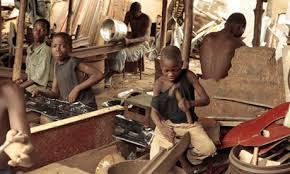
English Standard Version (ESV)The Holy Bible, English Standard Version Copyright © 2001 by Crossway Bibles, a publishing ministry of Good News Publishers. I have sat in so many different church contexts over the years and heard this parable taught the same way. “Use your talents/gifts/money for God, because God doesn’t want you to waste what He’s given you. You are supposed to multiply it and increase it and use it for His glory/for good/to show others His blessing…..” But, hang on a minute. What if we turn this parable on its head? What if Jesus is not casting God as the master, but he is again directly speaking into the societal set up of the day? What if this master is in fact a ruler in an agrarian society, with a governing class beneath him, a section of merchants, retainers and priests with a few artisans thrown in underneath that and a bunch of unclean/degraded/expendables at the bottom of the pile? If this is so, (and I’m not sure the master fits the bill in terms of who Jesus is revealing the Father to be), then what might the parable mean? Is it possible that the radical person is not the one who doubles the money of the “unjust ruler”, who reaps where he doesn’t sow etc etc? Rather, could Jesus be highlighting the one who choses to challenge this way of life, that in effect keeps the ruler rich and powerful, or gives increase to the ones who are willing to increase their wealth through defunct systems of usury, to be the real radical/irritant/one of another kind of Kingdom? It’s not to say that God doesn’t want us to use gifts he’s given us for the benefit of others…..but maybe that’s just not what this parable is about. Too often, the parables of Jesus are used to uphold and justify a certain way of doing economics and perhaps we don’t want to engage with the hard-hitting realities of what he might really be saying…. If we assume that this master does not represent God, then what might a modern-day reading of it be (also given the context of international debt)? Maybe something like this: For it will be like the CEO of a big chocolate company, who went to the Ivory Coast to ensure a good flow of chocolate into the West and ever expand his chocolate empire. He called three of his most entrusted leaders to himself, and asked them to ensure more chocolate at a lower price. He set one of them, with the most experience over 5 factories, the next one over 3 factories and the last one over 1 factory. The first two set to work, thinking about how they could make more chocolate for less money in order to keep their boss happy and the business functioning well. They knew if they did well, they would secure their own future in the company and good income for their families. Understanding capitalism, they came up with a cunning plan. They decided the best way would be to get cheap or even free images-2labour. So, they enslaved children from the surrounding area and nations with families who were too poor to keep them, and put them to work in the fields, picking the cocoa, or in the factories at the grinding machines, under terrible and dangerous conditions, in which many of the children died or were abused by hard task masters. images-1The last of the workers, saw what the other two were up to and it made him sick to the stomach. He refused to enslave children in this way and couldn’t understand the motivation of the CEO. He chose to pay people a fair wage, keep their working conditions good and have strong morale amongst his team. The CEO returned. He was willing to turn a blind eye to the methods and was full of praise for the ‘business acumen’ of the first two. He paid them well, ensuring his ‘fair trade’ logo and set them up over even more projects to continue achieving brilliant results. The other guy was out on his ear, sacked from the company with no right of appeal. Confused and dismayed, what was he to do? End his life? Beg for his job back and act the same way as the others? No, he continued Unknown-1to try to live a life that restored people’s humanity and hoped for “the more beautiful world our hearts tell us is possible”. So, who is the radical carrier of the Kingdom of God here?

Political Parables – The ‘Other’

I recently participated in an extremely enjoyable conversation about ‘The Parable of the Good Samaritan’ and how we read it/it reads us today. (Read or watch below).

Luke 10:25-37 English Standard Version Anglicised (ESVUK)

The Parable of the Good Samaritan

25 And behold, a lawyer stood up to put him to the test, saying, “Teacher, what shall I do to inherit eternal life?” 26 He said to him, “What is written in the Law? How do you read it?”27 And he answered, “You shall love the Lord your God with all your heart and with all your soul and with all your strength and with all your mind, and your neighbour as yourself.”28 And he said to him, “You have answered correctly; do this, and you will live.”

29 But he, desiring to justify himself, said to Jesus, “And who is my neighbour?” 30 Jesus replied, “A man was going down from Jerusalem to Jericho, and he fell among robbers, who stripped him and beat him and departed, leaving him half dead. 31 Now by chance a priest was going down that road, and when he saw him he passed by on the other side.32 So likewise a Levite, when he came to the place and saw him, passed by on the other side. 33 But a Samaritan, as he journeyed, came to where he was, and when he saw him, he had compassion. 34 He went to him and bound up his wounds, pouring on oil and wine. Then he set him on his own animal and brought him to an inn and took care of him. 35 And the next day he took out two denarii[a] and gave them to the innkeeper, saying, ‘Take care of him, and whatever more you spend, I will repay you when I come back.’ 36 Which of these three, do you think, proved to be a neighbour to the man who fell among the robbers?” 37 He said, “The one who showed him mercy.” And Jesus said to him, “You go, and do likewise.”

Footnotes:

  1. Luke 10:35 denarius was a day’s wage for a labourer

The Holy Bible, English Standard Version Copyright © 2001 by Crossway Bibles, a division of Good News Publishers.

Or Watch it here:

UnknownIt’s a parable so well-known now, it is easy to let its impact completely wash over us. For me, it and the preceding dialogue poses 3 hugely political issues (by that I
mean how we live alongside our fellow humans) rather than party politics, which I consider to be an utterly defunct system which will not deliver to us the future we are calling for. (Having said that I recognise some people feel called to change it from within, and I am particularly excited to soon embark on the wonderful Caroline Lucas’ new book, ‘Honourable Friends?’)…….

The 3 issues are as follows:

1) With whom does your allegiance lie? Jesus’ challenge is straight – Love the Lord your God with all your heart, soul, mind and strength i.e. are you about loving God and walking in the ways of love or are you about serving Caesar or religion or an oppressive regime or a particular leader or a nation-state or flag?

2) Who is my neighbour? Who is there around me that I could be helping, but am not? Who am I too busy or too important to help, to stoop down to, to embrace? Who might inconvenience my schedule or delay my journey? Who might infect me or make me feel ‘dirty’? Who am I struggling to spend myself on behalf of? And yet, who is the unexpected person doing that for me?

images3) Who is the ‘other’ that offends me? I was watching one of my favourite TV shows the other week – gogglebox – absolute genius television! One of the reasons I love it is that it gives me hope that TV, rather than simply nullify our pain, numb us to the real issues, pacify and hypnotize us to carry on business as usual, can actually inspire some conversation, cause to engage with the ‘other’ and maybe even challenge and change our perspectives! One of the shows the goggleboxers were watching, was one about a man I have in all honesty had quite a low opinion of – Nigel Farage. It was a show about him as a person, rather than his (odorous) policies. It challenged me deeply. Nearly all of the people watching him, started out with quite a low opinion of him, but came out the other side seeing him much more as a human being. It is so easy to dehumanize the ‘other’, to ridicule those we don’t agree with and create the great ‘us and them’ divide. But the challenge of Jesus is so stark in this parable. Who is the one you despise? See, they are a human being like you, and maybe not so awful as you might think. (Not an excuse to not debate awful ideas btw!).

I wonder, as we look to the future across Europe, how helpful the vilification of individuals and people groups is? Will it give us a new, love based politics? When we really allow ourselves to imagine the future, I mean really imagine it, does it involve more separation and division?

I wonder, if Jesus told this parable in the UK today who he would cast as the ‘Good Samaritan’? Maybe a male taxi driver of Pakistani origin from Rochdale? Or a school girl from London who has some sympathies for some of the ideas of IS? Perhaps a member of the EDL? PLEASE don’t mishear me. I am not for one minute suggesting that those who did the despicable acts in Rochdale, or those carrying out heinous and barbaric crimes in the middle east, be that IS (or the nation-states bombing the middle east) are “good samaritans”. But if we are not careful it is possible we tar too many people with the same brush. Interestingly, we wouldn’t have an NHS without the 11% of all our staff and 26% of the doctors who come from overseas. Maybe we (who is the ‘we’ – the UK? Europe? Humanity?) are richer together and if we allow ourselves to discover interdependence, we will find some love from very unexpected places and find ourselves embracing those we once thought “beyond the pale” (originally a phrase meaning those in Ireland who lived outside the British boundaries…..)?