
We had a conversation as part of the Love Politics Initiative recently hosted in Silverdale, in which we looked at just how broken language is. So, even in writing this post, I will fall short of what I hope to communicate and recognise that what I write may be misunderstood, misconstrued or misinterpreted.
I left the weekend with three words resonating for me: recognition, rearticulation, reconnection. For me, these three words express what it means for us to recover the public space as a place of real discourse for politics/theology/philosophy/psychology/sociology all of which I believe belong in public and to the masses, not just the few.
Recognition
Cognition is all about knowing things. Sometimes we can be so sure that we know something or know somebody, but then something happens that utterly changes our perspective or our previous ‘knowing’. We ‘re-cognise’ a person or a situation. We see it differently. Take the famous example of St Paul on the road to Damascus. He encounters something he previously thought he knew about and had boxed in his mind, so much so that he had given his time and energy to try to destroy it. But then he had an encounter with Jesus which was unexpected and utterly shifted what he thought he knew. Suddenly he was blind and realised how blind his ‘cognition’ had been. When his eyes were reopened, he recognised the world and humanity in an altogether different light.
So often I have made up my mind about people or made judgements about them, often based on rumour, hear say or other people’s opinions, but when I actually encounter that person, I recognise they are very different to what I had thought I knew. I wonder how much of the brokeness we find in any given area of social or racial division is based on assumption and ‘knowing’……perhaps when we learn to recognise people different to ourselves, when we know them differently because our eyes see differently, we can find new ways of being together.
I have written previously about the great work going on in Leeds with a shift from talking about multiculturalism to an understanding of interculturalism. It resists the desire for homogenisation and shifts the conversation to one of mutual respect, with a celebration of a “give and receive” way of being together. There is great work in Lancaster though the “East meets West” initiative. Work continues in Ireland in co-educating children across the old Catholic/Protestant divide. Cafes in Israel and Palestine actively encourage Muslims, Jews and Christians to eat together. We are also seeing beautiful stories emerge as various households across Europe welcome refugees into their homes. We must break down what we think we know, so that we can learn to see differently, to re-cognise each other. This breaks down fear, which is always the dividing wall and allows love to drive that fear away.
Rearticulation
My friend, Mike Love, who is one of the best thinkers I know, recently wrote an essay on public space. He wrote powerfully about how nearly all our public space, once the domain of the male (it has nearly always excluded the female), is now almost entirely privatised and controlled. He riffed on the need for us to articulate our public spaces. To articulate can have three different meanings. It is used to describe speech that is coherent and eloquent. It has a medical meaning to describe how joints fit together and a third similar meaning in the world of architecture.
Our public conversations are currently not very articulate. Too many voices go unheard or forgotten, not given space to articulate. We have become dislocated. Our physical bodies often never meet with others and so the corporate body has become dysfunctional. The Leeds Poverty Truth Commission has done and continues to do phenomenal work in this area.
Our physical spaces, even the design of our cities and certainly some of the social cleansing we are seeing in some of our big cities is causing further separation. Where are the city planners who might know how to design space that rejoins and heals us? We need to be rearticulated so that we can recognise one another and rearticulate that it is only love that will help us find the future of peace together.
Reconnection
When we learn to recognise the world and all that live in it differently, and are rearticulated through the rediscovery of our shared public space and our language becomes one of healing and reconciliation in place of division and suspicion then we can become reconnected. There is a verse in the bible that I love. St Paul, who has learnt to see the whole world in a completely different way says that Jesus came to reconcile all things to himself through the cross, (not start an exclusive movement). He pulled the whole of the creation back into the flow of love that comes from God. But he also made a way for us all to be reconciled and reconnected. It is in essentially kenotic love (Thomas Jay Oord – ‘The Uncontrolling Love of God”) that we can all find hope for the future. To put that another way, when we understand that God is first love and everything else flows from this love, we find a way for ourselves to be reformed and reorientated in the world. It is in the very act of taking up our own crosses, of not demanding our own ways, of being misunderstood and dehumanised by the ‘system’ that allows us also to be reconciled and reconnected to all things.
A couple of blogs ago I wrote that I believe we need a revolution of love. I believe that repentance IS the revolution we need. And what is repentance? Isn’t it recognition, rearticulation and reconnection? All of these require a dismantling of selfishness, pride, greed, and everything that stops us walking in the way of love; everything that prevents us building the wellbeing of those around us, the world we live in and indeed ourselves! I have personally found through my own encounter with Jesus a continual journey of reorientation in the way of love. Where do we think that we see clearly, but are actually motivated by hate or fear? Who or what do we need to re-cognise? What can we co-create that will enable re-articulation and re-connection/re-conciliation in our neighbourhoods, towns, cities and nations?
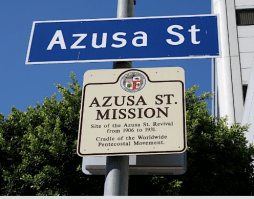 110 years ago last weekend, there was a phenomenon that occurred at Azusa Street, Los Angeles, which saw the birth of the Christian Pentecostal movement and forever changed the face of global christianity and society as a whole. In the gatherings and prayer meetings that happened during this time, many people encountered the egalitarian love of God and were utterly transformed by it. In a day and age in which there was still an utter domination of Black men and women by Whites and the general degradation of women of all colours and backgrounds, something incredible unravelled. Suddenly, men and women, blacks and whites found themselves to be equally loved, equally honoured and equally transformed. Sadly, within just a couple of years, much of this free and radical move of God, this outpouring of the Holy Spirit, had become commodified and controlled with the separation of men and women, black and white as entrenched as ever.
 unstoppable. It is without doubt, that one can trace this awakening force all the way through to the bravery of Rosa Parks and the peace-fuelled dream of Martin Luther King. But, I want to argue that between the early 20th century and the time of the Civil Rights Movement, a virus had infected the movement that has ultimately led to it being ineffectual in creating a truly egalitarian society.
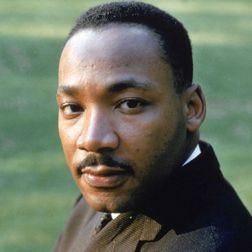 Sovereignty through a leadership of domination and control, meant that rather than creating a new dance, to which all could be invited, it was believed that it was only through the positions of power that one could affect change. So, the contemporary critics of MLK may have been onto something when they said that he should not be knocking on the door of power in order to be part of the white man’s game. Rather, the movement could have found a new way of being that they invited all, including the powerful to join in with.
 ace in many ways). Not because his motives were wrong. Not even because he was naive. No, the truth is that real change doesn’t happen from the top. The positions of power are incapable of making the changes that many long to see. Generally the positions are filled with good people, but they find that the power they thought they might have is utterly impotent. They are actually powerless to do the very thing they were elected to the office to do! Otherwise, we would have implementation of Obamacare, and many other injustices put right…..only we are seeing the very opposite of this occur on both sides of the Atlantic.
 reimaginingthefuture