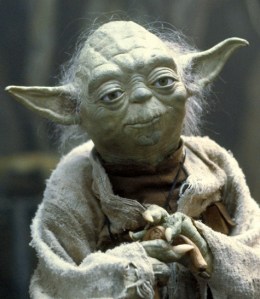
 I was watching ‘The Empire Strikes Back’ with my eldest son a few days ago – love that film. There’s a brilliant bit in which (for those odd ones of you, who aren’t into Star Wars) Yoda (the Jedi Master) is training Luke Skywalker to become a Jedi. Luke catches a glimpse of the future and asks Yoda what will happen. Yoda tells him that the future is always moving, and so it is difficult to see. We live in a moment in time, when so much of what we have taken for granted until now is crumbling around us. The ‘rich west’ is no longer the great power that it once was. The globe is changing. Free market capitalism is failing, democracy is being revealed to be the child of empire that it really is and the nation-state project isn’t working. Yet, at a time when everything is shaking, and uncertainty taints our sense of stability I feel a deep hope that there is a future, which though uncertain on one level, due to the dynamics of human interactions, complex choices and external pressures beyond our control, could be one in which the peace and love that humanity longs for, could be more real.
There’s a guy, I like a whole lot! His name is Walter Brueggemann. One of the things he says is that “we must be unafraid to subvert the dominant realities of our time.” There are things, which we assume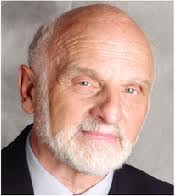 to be true, things deep in our psyche which we hold fast that are not really in line with what it means to be fully human. These mindsets, fit into three main categories – firstly, our paradigm, or worldview, secondly our praxis, politics or how we live and thirdly our personhood, or how we see ourselves. If we don’t face up to some of the ways we think and challenge those things then maybe the future is inevitable……
Over the Christmas period, I always love listening to Handel’s ‘Messiah’. I especially love that famous piece from the book of Isaiah, found in chapter 9 v 6 and 7. It says: ‘For to us, a child is born, to us, a son is given. And the government will be on His shoulders. And He will be called Wonderful Counsellor, Mighty God, Everlasting Father, Prince of Peace. Of the increase of His government and of Peace there will be no end.’
Jesus was born at a moment in history when Caesar Augustus, the first emperor to call himself the ‘Son of God’ was in power, in Rome. He comes onto the scene telling people to ‘Repent, for the Kingdom of God is near’. Repent, change the way you think about God, the world, the way you live and who you are. Think differently about the future and what is possible.
Firstly, He challenges the paradigms of the day. Who is this Messiah you were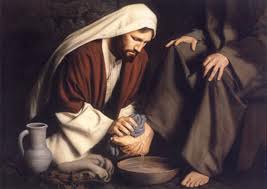 expecting? You wanted a warrior? Oh, different kind of warrior am I (I’d love it if Jesus spoke like Yoda!). What do you think it means for this Messiah to be called ‘the human one’ by the prophet Daniel? Who do think God is? You think God is a Sovereign Dominator who needs all to submit to Him? “No”, says Jesus, ‘if you have seen me, then you have seen the Father. I and the Father are one. And I have come as a servant, one who pours out his life for others.” Caesar, the one who calls himself Son of God, has not even begun to understand the nature of God. Jesus declares himself to be God and shatters any other understanding we may have.
Secondly, He challenges the politics. He prioritises those most forgotten and marginalised in society. He is the champion of children, he breaks cultural taboos and promotes women. He goes to the poor and the sick. He associates with those of disrepute. He champions the foreigner and the refugee. He declares a new 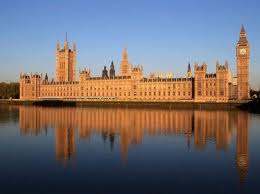 economics in which you either serve money or you serve God. He devalues money to be a resource not a ruling power. He stands in the shadow of temple mount, and declares that ‘if you have seed as small as a grain of mustard seed, you could say to this mountain (this whole system established over centuries, which has ended up oppressing and suppressing people) be thrown into the sea, and it would be done.’ At a time when the romans were establishing ‘ecclesia’ as the ruling councils of their cities, Jesus establishes his ‘ecclesia’ made up of a mixed bag of the un-elite, whom he wants to learn how to steward the resources of a city for the good and peace of those who live there. He comes to a contested city, Jerusalem and declares that we are to love our enemies and turn the other cheek…….Shane Claibourne has recently written a phenomenal piece on what Jesus would say to the NRA, in the Huffington Post and it is worth a read.
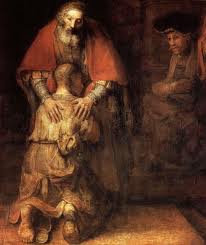 Thirdly, He calls us to see ourselves differently. To be those who carry light into dark places, hope beyond hope to those who have lost their way in disillusionment, peace to those who are torn apart and warring, love to those filled with hate and grace to those who are broken and rotting. He calls us to recover our humanity, to become like him, the human one. To be those who forgive and so find forgiveness and freedom. To be free from all that which makes us less than human (aka sin), that which destroys ourselves, relationships, other people or the planet.
And so, in challenging the paradigms of the day, the politics (and economics) and even the person as to what it even means to be human, he challenges the powers. It turns out, the powers don’t like it. And so they kill God! And as they kill him, instead of smiting them all,  he declares forgiveness, he sucks up all the ‘sin’ into himself, like a cosmic sewer, and then declares all things new. A chance to start again. A chance to live and hope for something other. You see, the powers never counted on resurrection, but love wins! It is, as Aslan calls it, the deeper magic. Love is stronger than death. And so the one who is love, defeats death and brings life. Then He gives us the substance of Himself, the Holy Spirit to fill us and help us and calls us to follow Him, to the same radical, life-laying down love that holds no fear of death because in Him is life in all its fullness.
But something terrible happened. In the 4th century, a theologian called Eusebius and the Emperor Constantine worked together on a theology, or way of thinking about God, that led us to believe that God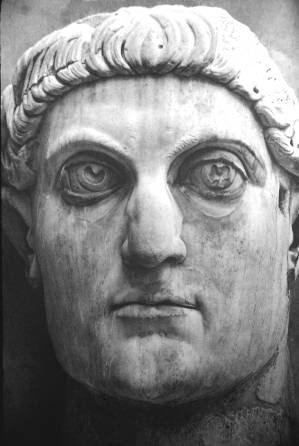 is not just like Jesus, he is, rather, like an angry emperor that wants to dominate other people and have them all come and bow down. So church and empire got into bed together to try to create peace through dominance and created a mish-mash of children, including the Nation State, Western Democracy, Free Market Capitalism, Communism, but none of them come close to the radical Kingdom of God that Jesus spoke of. Too often christians have aligned themselves with these things, rather than having railed against them. Too often, christians find themselves yearning or harking for the ‘good old days’ of the ‘christian nation’. There is no such thing. A nation is not ‘christian’, just because it seems restrained, or has the ‘right’ kind of laws in place. The days of ‘christian dominance’, or christendom, are over. We cannot go back. The context we find ourselves in now, is completely different. It is the future that calls us forward. That does not mean a society cannot be transformed, but top down dominance is not the way of Jesus!
Empire, in any of its forms has nothing to do with Jesus or his life-laying down kingdom of peace.
My friend, Roger Mitchell, honorary research fellow at Lancaster University calls this emptying out of power – ‘kenarchy’, a word coined from the greek – ‘keno’ to empty and ‘archy’ power. It is this that I want to explore more in the next few blogs and what it might be like if we were to embrace this way of life more fully.
What if to have a ‘God complex’ was not to misuse power but to be servant-hearted and to be a one who facilitates and makes room for others so that they can become fully what they can be? What if we were those who chose collaboration and partnership instead of control, manipulation and dominance through competition? What if business,  healthcare, education, government, finance, media etc were based on these kind of principles? What stories might be told to future generations? My challenge this New Year is to realign my mindsets again with those of the One who is Love. My allegiance is not to any flag or nation-state. I believe our hope for the future comes from embracing an altogether different paradigm, politic and personhood. It is peace I hope for, and peace I pursue and that is going to mean some radically different choices for us as humanity than the ones we are currently making. This year, I resolve to choose life.
0.000000
0.000000

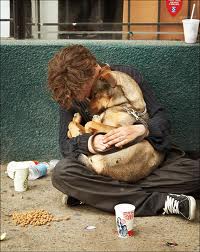 Where the rich can access better healthcare more easily in the ‘christianised’ west, we need to ask ourselves how and why on earth we have let this happen – the answer is not a comfortable one. When 50 million americans cannot access health care, and a black man living in New York has a life expectancy of just over 40, also true of a homeless person living in London, we have to wonder about our priorities. You are far more likely to die young in an inner city estate from chronic disease than if you live in a middle class suburb. And that is only the health injustice in the west.
 We focus on increasing the life expectancy of the rich (white) ones in the UK to 85 or more, and feel a deep sense of achievement, while all the time, children die of diarrhoea (can you imagine if that happened here?), starvation, malaria, things that are genuinely and inexpensively preventable?! I don’t come at this naively. I don’t think the answer is a quick fix, but there is a kenarchic challenge – to those whom much is given, much is required. So often we hang on to human rights, and make them about me and my rights. We want to become our own mini emperors, where we demand the best for ourselves and the self protectionism sadly drowns out the cry of others. The truth is, we don’t need to make healthcare everywhere worse for good health care to happen everywhere for everyone.
 reimaginingthefuture