
Health and Social Care
The UK is facing an existential crisis, especially when it comes to healthcare. I think it is part of the reason why the Labour party are in such appalling disarray at the moment. When the nation state as we have known it is beginning to fall apart, what is the role of the state? The question comes into sharp focus when it comes to our beloved NHS. The financial nightmare facing the NHS is in the press everyday. How much of this has been orchestrated by a bureaucratic system that wishes to see its demise we may never know. But the fact remains, there is a whole lot of debt, an ageing population with increasingly complex health and social needs and a significant underspend in terms of GDP on health compared to most of the other ‘developed’ nations.
Although I believe that we will (and need to) see increased localism, especially when it comes to political participation and economic alternatives, discovering together entirely alternative ways of being and organising ourselves, I still believe in a more national approach to health and social care, as for me, one of the roles of leadership is to ensure provision for those most easily forgotten about or marginalised in society.
Obviously this subject matter is far vaster than a short blog can offer, but here is a starter for ten:
I would therefore increase spending on health in line with need and GDP. I would support moves through partnerships between health and education to encourage our children and young people, in particular, to exercise and eat healthily, therefore breaking some of the health inequalities we see presently in the years ahead. I would look to improve the overall wellbeing of society, as we know that both extreme poverty and extreme wealth is bad for our health. We need to talk about physical, mental, social, spiritual and systemic health. We need a 70 year vision for healthcare, not something that changes with the wind of each new parliament. People would be empowered to care for their own wellbeing and look after one another, because where people are connected to one another, they flourish more readily. I would not privatise the NHS, but keep it public, learning lessons from around the world, ensuring our systems are continually improving and accountable but providing kind and compassionate health and social care to everyone in our communities. I would amalgamate the health and social care budgets. I would invest in measures to improve the overall mental health of the nation by looking at the root causes of our unhappiness and disconnectedness, ensuring those who need psychological therapies and psychiatric expertise are able to access this. I would ensure our staff are appropriately paid and would create a culture of participatory leadership, where we care for the health and wellbeing of those who work in the system. I recognise that health is best provided in the local community and will support the growth of integrated care communities, like those in Morecambe Bay. General Practice is the bedrock of such communities and will therefore be funded appropriately. Communication training, led by patient-experience, would be compulsory. All training would be integrative, problem based and solution focussed (that could do with some unpacking – maybe another time!).
I would break the negative cycle caused by the economics of ‘payment by results (PBR)’ and create participatory shared budgets, breaking down the walls of competition between segments of the system that need to collaborate. I would create emergency care hubs, co-locating services that need to work in an integrative manor. We have to face the fact, that it would take an enormous cultural shift to stop people walking through the doors of the ED, so let’s work with it, rather than trying to change the tide. I would want to see the 5 ways to wellbeing as part of every work place environment. In hospitals, there needs to be a focus on faster discharges (something the dreadful cuts to social care budgets across our county councils will only worsen), working with community teams to enable people to be cared for in their own homes. We need a complete overhaul of our residential and nursing home sector, finding areas of best practice and raising the bar significantly in terms of how we honour and care for our elderly citizens. We need to have a philosophical shift in our approach to death – it is an emotive subject and I have vlogged on it previously on my other blog http://www.reimagininghealth.com People need to be able to die well, and far too often they die in the strange surroundings of a hospital, cared for by people they do not know, when they could have died at home or in their nursing home, surrounded by people who love them. If only we could face up to the difficulties of death, we would embrace it in a much more healthy way…..(again I recommend Atul Gawande’s book ‘Being Mortal’).
 It is no secret that I voted to remain in the EU. All 3 generations of my family, who were eligible to vote, also voted to remain (and my kids would have voted the same way, had they had the chance – under no parental pressure, you understand!). And yet, as my long departed Nanna would say (the one, who knew all the names of her grandchildren after her stroke, except mine, and called me, Edith!)…. “Well, here we are….”
 Ontology – what?! Yep – in the end, so much of who we are and how we live, what we align ourselves with and how we would choose to shape our future together depends on this. Basically – why are we here? What is our purpose? We need to understand this at an individual and a corporate level. As I have suggested in my other blog (www.reimagininghealth.com) our health and wellbeing actually depends on having a life that aligns with this sense of knowing why we are.
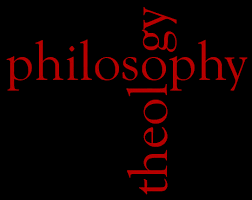 certainly our politics is under-girded by things people have/have not believed about God and his/her interaction with the world. Whether you are a person of faith or not, it is difficult to deny that for good or ill, the geopolitical worldview of the West has been hugely shaped by the partnership of church and empire over the preceding several centuries. This area of thought and study especially shapes our understanding of ‘Sovereignty’.
 implications of how we then live in the world. David Cameron tells us there is ‘no alternative’ to the Neoliberal economic agenda with its reliance on the ‘benevolent’ free market, competition, privatisation, biopower and austerity. And whether the UK or the EU is the worst proponent of this, I’m not sure, but perhaps other options are available to us. Maybe we don’t need to have an ever widening gap between the rich and poor. Maybe we don’t have to have a London-Centric (or even with the emergence of a Northern Powerhouse, a Liverpool-Manchester-Leeds-Centric) economy. Does our economy always have to grow? If it does – what does this mean for the creation of a peaceful world or our ecosystems? Isn’t it high time we had a good hard look at what our policies are doing to the world we live in, or demand in terms of war and self-protectionism? I recently trained as an executive coach – I can tell you for sure, there are always options…..it is a lie to say that we have no alternative. We do. We can have a fairer society and perhaps it’s time for us to say to the corporate giants who threaten us that they will up and leave if we don’t give them enormous tax breaks and turn a blind eye to their greed, that we will find a kinder way of being without them. There are options open to us of renationalisation of some things, co-operatives, credit unions, gift economies, time banking and many other things explored by top economists, which the press give no voice to.
 And what about education? Is it OK that there was such a massive split in how people voted according to what they had achieved at an academic level? Are we developing academic snobbery? Are we developing education systems where there is an understanding of important issues like the one we’ve just had a referendum about? If it wasn’t for our dinner time conversations, my kids would know nothing about the EU – but thanks to Michael Gove, they can tell me about subordinate clauses and modal verbs! There is something very wrong with that.
![5517007247_63d55ac8f5_m[1]](https://reimaginingthefuture.org/wp-content/uploads/2012/02/5517007247_63d55ac8f5_m1.jpg?w=584) For healthcare – we already know that the Brexit campaign told us a complete lie about how much extra funding would be available to the NHS. But here we are! Given our current economic policies, it is difficult to see how our Nation’s favourite brand will survive. You cannot believe in an ever shrinking state and increased privatisation and continue to have the best and fairest healthcare system in the world! This is why we need greater participatory leadership and truer representative democracy!
For healthcare – we already know that the Brexit campaign told us a complete lie about how much extra funding would be available to the NHS. But here we are! Given our current economic policies, it is difficult to see how our Nation’s favourite brand will survive. You cannot believe in an ever shrinking state and increased privatisation and continue to have the best and fairest healthcare system in the world! This is why we need greater participatory leadership and truer representative democracy! reimaginingthefuture