At What Cost?

I was handed a book this week entitled: “People over Capital” (the co-operative alternative to capitalism) and I’m looking forward to reading it on my way to Toronto later next week. The back cover starts with these words: “Economic turmoil, rampant inequality, austerity politics, climate chaos. Capitalism is clearly failing and ordinary people are being forced to pay the price. Faced with such deep-rooted problems there is real hunger for alternative ways of organising our economic systems.”  Increasingly I am becoming aware of the effect of what Foucault calls “biopower” or the commodification of life itself.

The film UK Gold has highlighted with insightful and expository brilliance the true relationship between the UK ‘democratic’ government and the corporate giants. If we’re not careful, we turn a blind to the cost of the cuts and the immense toll that the squeeze is really having on the little people. Whilst literally billions of pounds are being siphoned off into tax havens to bolster the super rich, we are making unbelievable cuts to our public services and welfare systems. The heartbreaking truth is that we are paying for this, not only financially, but people are being eaten up like bread, fodder for the economic machine that is destroying the very life we are made for. I know of two people in the last few days who sadly took their own lives under extreme pressures being placed on them as they tired to serve the public good – one a police officer, the other a social worker…….

I have blogged about ‘revolution’ and the need for something utterly and life-givingly different to what we have now, but I maintain that even in the face of the pain and sorrow, stress and strain that many find themselves in, the answer has never been and will never be violence. There is another way, and it is the way of love. We must love those who perpetrate these crimes against humanity. Our only hope is to forgive the wrong we are suffering and so find a better future for us all. How do we ‘turn the other cheek’ when we feel smacked in the face by an uncaring system that would squeeze the very life out of us for the sake of keeping the economy going? How do we give of ourselves lovingly in the face of such opposition and uncaring greed? How do we dance to a different rhythm than the dominant marching beat that sets it’s metronome to the whims of ‘market forces’?

Now is the time for creative experiments, like those of William Penn, before his sons sold out to greed and dominating hierarchy. These are days to love our enemies until there is nothing left for them except to love us back, as Martin Luther King demonstrated. We are in a moment of extraordinary potential. We must not rush, but take our time to let new hope, vision and pragmatic ways of reorganising ourselves to germinate within us. Kenarchy is about emptying out power, laying our lives down in love for one another, prioritising the dispossessed and radically renegotiating our relationship with money (sacred economics). We can remain as we are but the stark ongoing cost will be destruction, demoralisation and death. Or we can put on love, forgive the past, learn from it and embrace the future. It will cost us everything, but our hope is one of life.
Sacred Economics – The Trouble With Property

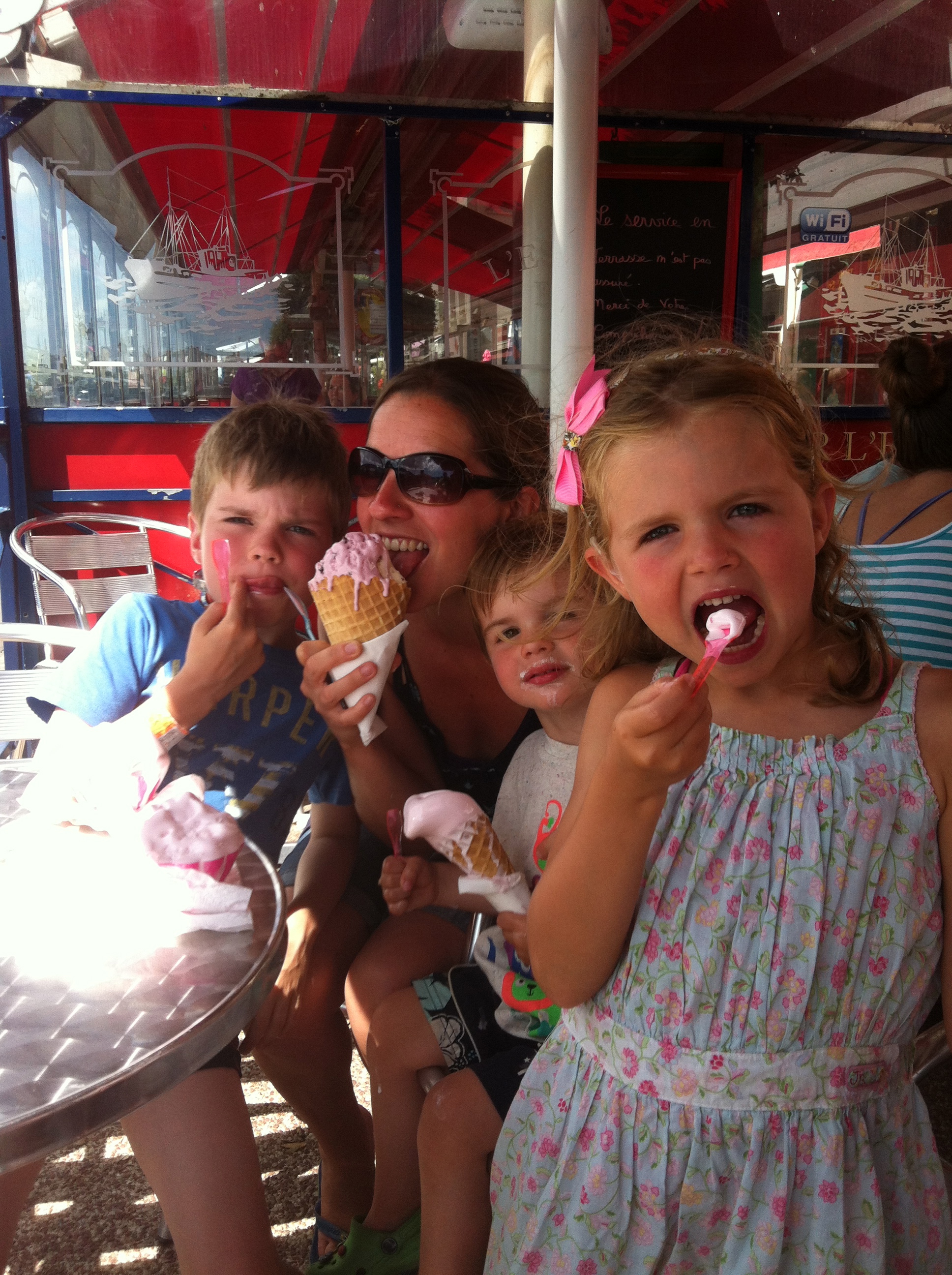
Sorry it’s been a while! I was trying to do a chapter a week of this awesome IMG_1638book and then a few things converged at the same time and conspired to make blogging more tricky than I would have liked. And then, I went on holiday with my awesome wife and children and we had some QT in La Belle France. But, now I’m back and ready to plod on….

We were hoping that Charles might be coming to Lancaster, to speak at the Richardson Institute (a centre for peace studies at the university) in the late autumn, but alas, we cant make it work – but he is in York, giving the Schumacher Lecture, Friday 22nd November and then in Leeds on 23rd. (I’ll be in Toronto…..wooot, but sad to miss him!). Go if you can!

Onwards! This chapter is challenging to the core. The age of separation has reached a fullness of times. We find ourselves in cyclical crises, (so if you were thinking that the mini property boom in London is an indication that it’s back to business as usual, then think again!) and the trauma of this separation from one another, our community, nature itself and the divine have remedied themselves in self protectionism. The tragedy of this logic of me and mine, as CE rightly points out is that we seek to recover our loss by expanding and protecting the separate self and its extension: money and property.

So, the modern concept of property, or the ownership thereof is a symptom of imgresthe sovereignty of the individual. If we claim ownership of that for which we did not labour, the land, the rivers, the trees, the resources of the earth, which are a gift to us, then this is tantamount to theft. It was Marx, and others like him that proclaimed “property is robbery”, as the origin of most property was taken by force – witness most of the United States of America as just one example! It was the rich and powerful who seized the land and made the laws. So if property is robbery, then the laws which protect private property, so CE argues, are those which perpetuate a crime.

But he is not advocating the abolition of private property for three reasons. Firstly because abolition is a forceful imposition on the unwilling. Secondly, private property is only a symptom of the deeper sickness of separation. Thirdly, the problem is not necessarily ownership, per se, but the unfair advantages of having it.

So, what do we do? Sell everything we have and give to the poor? A beautifully radical way to live. Jesus challenged a rich young man to do just that. He couldn’t do it, because he loved his wealth and it gave him a status and position that he held too tightly. I often wrestle with wondering if I am like that man…..But then Jesus also says – to whom much is given, much is required…..

Perhaps if we embrace gift, we understand that nothing we possess is really ours. And so we must ask ourselves how we steward that which we have been given, so that it can be given again to the community in which we are embedded. Can our properties become gifts?

Sacred Economics – Gift 2

Eisenstein uses his opening chapter on Gift to set a contrast for the rest of Part 1 of his book. He is introducing us to the notion that economics and the use of our money, in particular, is a sacred thing.

Charles paints a picture using the natural world around us to challenge the perception that evolutionary biology is a cut throat, competitive business , which is all about survival of the fittest, driven by our “selfish genes”. He argues that in nature, “headlong growth and all out-competition  are features of immature ecosystems, followed by complex interdependency, symbiosis, cooperation and the cycling of resources.”

The violent, competitive, growth-driven, accumulative, oppressive, marginalising and hoarding economic of today is an aberration. It is time for humanity to enter a new phase of life. It’s grow up time! “Money may not disappear anytime soon, but it will serve a diminished role even as it takes on more of the properties of the gift. The economy will shrink (do not fear this!) and our lives will grow!”

It is crazy that money was originally a means of connecting gift with need. Yet now we often find ourselves in deadening jobs out of economic necessity, with crazy phrases like “I can’t afford to do that,” or “the cost of living is so high.” But CE goes to town on this! “Our purpose for being, the development and full expression of our gifts, is mortgaged to the demands of money, to making a living, to surviving. Yet no one, no matter how wealthy, secure, or comfortable, can ever feel fulfilled in a life where those gifts remain latent. Even the best paid job, if it does not engage our gifts, soon feels deadening, and we think, “I was not put here on earth to do this.”

The day of falsely separating our world out is over. There is no sacred/secular divide, everything we do and touch is sacred, because life is sacred and we need to start viewing both work and economics as truly sacred things. In the next blogs I will explore what Charles calles the ‘Economics of Separation’, its main components and how it has landed us in the mess we find ourselves in.

When we stare the beast in the face, we will see that we are tired of its ugliness and want to be part of a movement that is far more creative and beautiful. Surely, we do not want to align our lives with something which causes devastation and destruction but rather that which perpetuates life in all its fullness. We are tired of being commodities, we want to be gifts. The way we use money will form a part of this story, as we recover together a new economics for a reimagined future of reconciliation and peace. If we begin to choose to enter the economy of gift then surely every mountain can made low and every valley raised up – an economic level playing field, where lambs can play with lions!