Political Parables – Education as a Revolution

Unknown

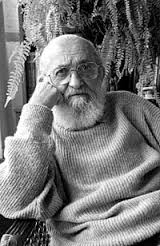
Paulo Freire

Paulo Freire was an educational revolutionary who saw that the poor, marginalised and oppressed in Brasil, took on the world view (or “social construct of reality”) of those who were their oppressors. More than this he described how the educational system was used like a “banking system” to deposit the world view of the dominant class, (with their wealth, power and privilege), into the hearts and minds of the lower social classes, therefore maintaining the status quo.

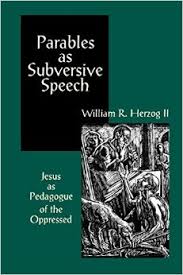
He spent loads of time with the “peasant classes”, (after a financial crisis in his own family left them very poor) and learnt that they were certainly not unintelligent and although illiterate, had an incredible language of their own. He went on to devise an educational program which enabled these “peasants” to learn rather than to be taught and in so doing released them to begin a revolution in which the powers were challenged, the presumed ‘ways of being’ were shaken and new freedom was found. Unfortunately, this was crushed by the military coup of 1964, but it left Freire never again to “underestimate the vested interest of political powers in controlling the production and distribution of knowledge through their system of schooling” (see amazing work on his by William R. Herzog II in Parables as Subversive Speech).

Unknown-1

William R. Herzog II

Herzog goes on to draw some extraordinary parallels between Paulo Freire and Jesus Christ, whom he asserts both hugely confront the power paradigms of the day and in so doing bring good news to the poor, freedom for those held captive to oppressive systems, sight for those who had been blinded by the worldview of the ‘mighty’ and light for those living in darkness.
Walter Brueggemann

Walter Brueggemann

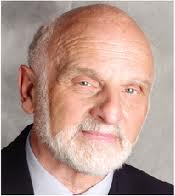
Mitchell, in his book, “Church, Gospel and Empire’ demonstrates how Jesus directly challenges the Imperial System of Rome. Brueggemann (in “The Prophetic Imagination”) contends that Jesus (as a prophet and much more than just a prophet) is fulfilling the prophetic tradition of those who have gone before, criticising the oppressive systems and energising a fresh imagination of how radically different a future built on the foundations of (God’s) love could be.

I wonder how many teachers these days see it as their role to teach and train their pupils in the ‘national curriculum’ and the ‘social constructs of reality’ to which we all subscribe? And how many see their role as revolutionaries who dare to allow our children to believe that the world we live in can be radically different in the future; where instead of an economics of affluence, we have an economics of equity, instead of a politics of oppression, we have one of justice and compassion, and instead of a religion of immanence and law, we have one of true freedom (again, see Brueggemann) – I don’t know, but if you’re out there – please keep going!
Political Parables – A Mini Series

UnknownI love reading. For lent this year, my wife and I have switched off the TV and are giving our noses some more book time. There are two books I’ve read this past 12 months which have impacted me deeply: “Parables as Subversive Speech – Jesus as Pedagogue of the Oppressed” by William R. Herzog II and “The Prophetic Imagination” by  Walter Brueggemann. I would seriously recommend them to you, whatever your faith or political background – they are challenging to the core. I want to blog a mini series on lUnknown-1essons I have learnt and thoughts that have provoked me as I have read.

One of the people whom I hugely admire is Mehdi Hassan. I admire his courage to speak his mind, to be unashamed about what he believes as a Muslim and his passion in debate. I have felt challenged by the way he puts his faith front and centre whilst engaging deeply in the political issues of our day. I make no secret of the fact that I am a man who loves and follows Jesus (not very good at it, but hey-ho!). The more I have discovered about Jesus, especially over the last few years, the more I have found I love him. My world view is shaped by his radical love for ‘the other’ and for ‘the enemy’, his prioritisation of women, children, the poor, the sick, the prisoner and those generally hated or ostracised by society. There is no-one in history who has ever brought such a sharp critique of Imperial Systems that commodify human life like fodder to feed an economic machine or challenged the status quo mindsets to the extent that he did. Nor did anyone else release such deep hope of a reimagined future.

And yet, those of us who claim to follow him have so often utterly missed his point and have been more caught up in creating a religion around him that he never intended anyone to build, partnering with empire in the process rather than criticising it and bringing transforming love and economic justice to all of the creation.

I hope this mini-series inspires some good conversation, either online or around some dinner tables about the world we live in and how we engage with it. For me, the parables of Jesus have as much dynamic power to shock us today as they did for his first listeners. Put aside any hang ups about ‘christianity’ or ‘politics’ and let the subversive stories make you think.


Independence?

imgresAs a family, we were down in Sussex over the weekend spending time with our best friends. Whilst there, I read a newspaper in which a local baptist minister was giving his reasons for standing as a UKIP candidate in the next elections. His reasons were really two fold. Firstly, he feels that UKIP will will help restore the UK to being a ‘Christian Nation’ and secondly he feels that the UK needs to be protected from a ‘bleak and intolerant Europe’.

Quite honestly, I am baffled! On his first point, my agreement lies entirely with Rowan Williams, who this week stated that the UK is post-christian. That is not to state that the UK does not have many christian principles under-girding its laws and organisational structures, it surely does. But that doesn’t make this a Christian Nation. The UK is, at best, a nation in which the majority of people (still) claim to have have some sort of christian faith, having been influenced by christian values. But to state that the nation is therefore “christian” is confusing to say the least. I mean, how “christian” is the UK? The UK invests heavily in weapons of war and breaks international law to engage in combat with other nation states. It protects the super rich and punishes the poor with a combination of tax and welfare cuts. It partakes in the global oligarchy that is the G8 and wields it power to extend its own interests internationally. It upholds global capitalism, as though it were this form of economics that will save the world, and in doing so is fully complicit in the global slave trade which upholds it. The church, like Jesus is to be the pedagogue of the oppressed, not those who make life more comfortable for ourselves, shutting our eyes to injustice whilst some moral principles feel safeguarded.

On his second point, I struggle hugely with the whole issue of independence, because whatever we may want to believe, we actually need each other. We need reconciliation, not division. We need love, not suspicion. We need gift not greed and we need collaboration not competition. How this is organised institutionally and structurally can be debated well, but to me the entire concept of independence stinks. I need you and you need me. The UK needs France, Germany, Romania, Sweden et al. and they need the UK. Where there are barriers and walls of division, we break them down, we do not create more for the sake of self protectionism – I cannot think of anything less christian!  We are not made for independence, but for interdependence, for community and for relationship.