Kenarchy and Healthcare – Paradigm

I think a lot of the time about healthcare. I guess, it’s because it’s the arena in which I spend a huge bulk of my time. I’ve studied and worked within this sphere for nearly 14 years now and it’s something I care deeply about. I think what I will write here will be helpful and applicable to other realms of work, but this is what I know, and so this is where I start – ha! though it won’t be where I finish!!

If kenarchy is about emptying out the places of power, lives laid down in loving and serving other people, then caring about the health of others is a good place to apply it! If kenarchy can be applied to our paradigms, praxis (or politics) and person, then wherever we work, whatever we do, we can use its lens to help us get some focus in each of these areas.

Were I to try to blog all in one go on a kenarchic paradigm, politic and the personal impacts on healthcare, then this could end up being the longest blog post in all of history! So I will break it down into the three subsections, starting with a kenarchic paradigm (the way we see the world). This is big picture stuff and doesn’t massively deal with specifics! For some, these thoughts are nothing new, for others I hope they spark challenge and debate!

Paradigm (with some politics thrown in for good measure!)

These are some initial thoughts on how my thinking about health care has been shaped in terms of the big picture.

1) Great health care should be universally accessible to all, and all should have access to the same standard of excellence, love, and care. I do not see health care as something which is earned or a privilege, but something which is freely given. Of course there are economic implications here, but perhaps if we stop thinking in terms of an economy of buying and selling (trade) and rather think of services that are given and received (exchange) then this may help us. It also questions the huge drive to privatise healthcare, in which money and profit are dangerously the motivating factors, rather than equity. Many of political philosophers writing currently, are calling for a new moral foundation or frame-work from which to establish new ways of being and living. The kenarchic basis here is that God is love and God is healer. God calls us to be like him and we too are therefore to be those who primarily function out of love and to be those who bring healing. Freely you receive, freely give…..

2) As my great friend, Roger Mitchell says “all knowledge is relational”. Too often, especially with intellectual copyright laws and big pharma, knowledge is power. But it shouldn’t be. If we gain knowledge, it is for the benefit of others, for their empowerment, for their betterment. That doesn’t mean there isn’t expertise, or specialism, far from it. We need one another’s knowledge, to honour and draw on one another’s gift, but if we hide it when it could help millions of people, or focus our knowledge on helping those who can pay us most, we need to question our humanity. So much of what we do in medicine, is a symbiotic relationship of learning and teaching. ‘Knowledge power’, just like any power, is not there to be lorded over others or enslave them to us in any way, rather it is for the service of others. An uncomfortable challenge. Knowledge needs wisdom for it to be used properly. The wisdom of God is found in a cross, where the human one, Jesus, gives his life in ‘foolishness’, refusing to bow to the status quo or powers that “know what to do”….but when we keep knowledge for our selves, or use it to make ourselves look clever and wonderful in the sight of others…..we are being less than human…..

3) Health care is diverse. Health care is not just about curing people. It involves some curing, but also some discovery, some therapy and some suffering with others over long periods of time. It is mental and physical and spiritual. It is natural and supernatural. It is about helping people to live well, die well and choose well. We must be very resistant to that which commodifies it into being about cures and results. We need to ensure we honour and use the vast breadth of care available especially for those, who don’t make financial sense or produce obviously fast results!

4) Healthcare is most effective when there is collaboration in place of competition. Time and again studies show that where teams work together to bring out the best in one another and collaborate together, outcomes are far better and those working are far happier than where competition is used as the model. The Kings fund and others have done so much work into this, and there is little else to comment on.

5) Healthcare is service. It is not about profit, or glory or self promotion. It is about serving people. That’s why I love that the health system we have in the UK is called the NHS. Working in this environment should remind us what we’re here for and what our motivation is.

6) Universal healthcare is affordable. It is a complete myth and a lie that we couldn’t afford to give good health care to every one on the planet. We make ridiculous choices as humanity to destroy one another, when we could be living very differently. Healthcare for everyone does not mean poor health care for everyone. Here is a brilliant TED talk by a truly excellent thinker, Thomas Pogge.

7) Healthcare involves joined up thinking and new partnerships emerging. We are stuck in a crazy cycle of a lack of joined up thinking between so many aspects of life and the economy. Plenty of examples of this in the next blog……but for example, health, education, international development, media, sport, as a starter for 10!

My hope is to take these 7 paradigms of kenarchic healthcare and apply them politically and personally……As it says at the top of my blog, when paradigms change, the world changes with them……


Reimagining the NHS – Part Deux

I read an article the other week by Matthew Parris, in the Times – not a paper I usually read, but still, I read it on this occasion! He was, I suppose, imagining a future without General Practice within the NHS and was of the persuasion that GP’s have had their day and are now no more than glorified ushers/gatekeepers into the ‘real deal’. He was of the opinion that people really want to see specialists and that generalists are a bit of a waste of space, time and money and would prefer the family doctor to be replaced by a family nurse. (I think we need both!). As an aside, he also doesn’t mention that this is entirely unaffordable and actually leads to worse care for the majority in the long run!

It got my cockles up, to say the least! I fear that he has somewhat missed the point of General Practice – what it is that actually goes on in our consulting rooms. Mr Parris doesn’t suffer from a chronic disease like COPD or diabetes or with the multiple pathologies that accompany them, apparently. His life isn’t falling apart and he isn’t unsure of who else to turn to with enough of a skill mix and position within the community to be able to help out on several levels. He hasn’t had a major diagnosis of a significant illness, be that a neurological issue, like MS or MND or an aggressive lymphoma or bowel cancer. He isn’t a drug addict with a complex personality disorder. He is unlikely to suffer from a severe and enduring mental illness. He doesn’t appear to have a skin disorder (many of which can mimic one another) needing regular reviews and clear management plans. He is unlikely to have chronic pain. He may not suffer with migraines or other headaches, ENT issues, recurrent bladder infections or a frozen shoulder. currently, he does not need palliative care co-ordinating so that he can die peacefully at home. I don’t think he will need to bring his children along for their 8 week check, immunisations, reassurance over coughs and colds, behavioural problems, developmental issues, constipation, soiling, acne – the list goes on. I see these kinds of things every single day, and not one of my patients regrets having to see me, as I have the privilege of having an overview of all the various things they have going on. I’m quite glad of my medical degree, extensive and varied speciality training over several years so that I can utilise this toolkit for whoever walks through my door! A good generalist, pursuing excellence in their career, with honed communication skills and a passion to serve and love people is, in my (extremely) biased opinion a vital foundation stone within any health system – particularly one that wishes to serve the poorest and most vulnerable people within our society. There is an ability within general practice to have a good depth of knowledge about a vast array of differing medical and non-medical issues which serves as a vital welcoming, gatekeeping and sometimes blockage to other services. In turn this gives us the ability to ensure that every person, no matter how much money they have, is entitled to a fantastic standard of healthcare which will be sustainable for generations to come. My plea here, I guess, is to honour the role that general practice plays – it is so much more complex than the article allows us to believe.

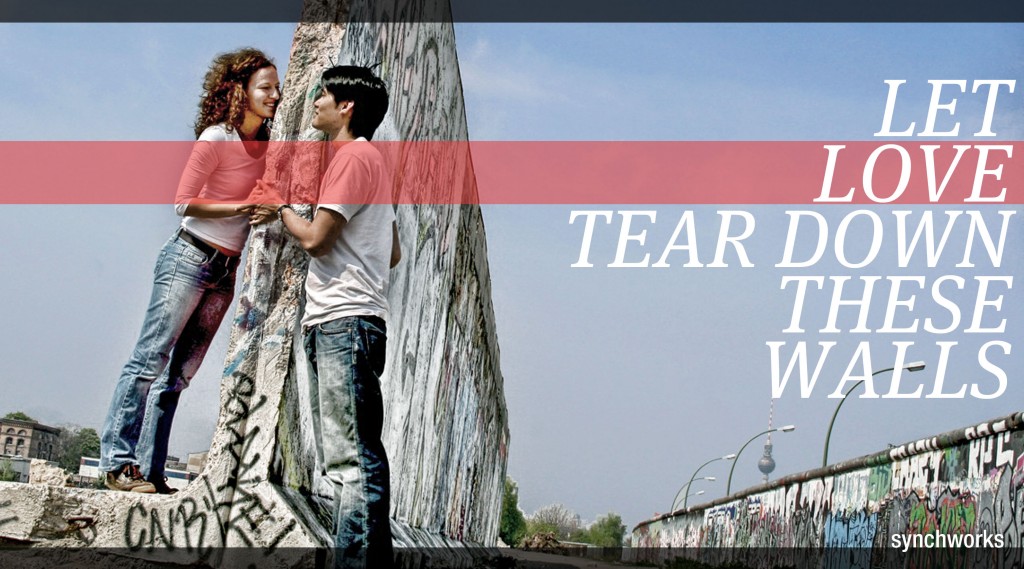
However, I do think that Matthew makes an important challenge, because once you get past Mr Parris’ rant over general practice, he unearths a problem (although I don’t know if this was his intention!), that needs discussion. It is the issue of walls! Walls, barriers, blockades, fences, call them what you will but there is just a whole bunch of stuff that divides primary (community) and secondary (hospital) care currently in a very unhelpful way (and don’t get me started on what is going on right now to the various vital therapies – more on this another time!). In the final analysis these walls mean that patient care suffers and there is a severe lack of continuity in that care. I think we need to learn to be a whole lot less territorial and learn that new levels of partnership between primary and secondary care are vital. The future is calling for new integration, where GPs can continue their care of patients into the hospital setting with far greater access to diagnostics (used appropriately) and hospital staff can step out of the huge monolithic hospitals back into the real world of healthcare in the community, for the community; where patients are not just targets to be met, but real people again, empowered to make choices about their health and futures.

If we are to reimagine the future of healthcare in this country, one of our starting places must be to imagine a culture without walls. A culture with teamwork and honouring of everybody’s various roles. Humility is the key to embracing change. Humility to let go of power in the pursuit of service. Humility to work together and not need to create a great name for ourselves. Humility to climb out of our ivory towers and important chairs and to normalise ourselves…..to re-embrace the reasons that we went into healthcare, before we got burnt out and cynical – a love-based ethic in which everybody matters the same! Let the walls and the towers come down. We must strengthen again the foundations. For me, one of these is good community medicine…….the day of the GP isn’t over, but a new day of integrated care and partnership is here. We will, quite rightly see a greater role for our wonderfully skilled nursing colleagues and this will mean letting go of some of our preconceived rights as doctors! Maybe we all need to be willing to let go of some of the tradition of our roles to find a new future (please no more arguments over who should be feeding patients, cleaning up vomit or making beds – if the need is there – meet it, whoever you are and whatever your role!…..will we still need GP’s in 30 years? – I believe we will. Will we still need specialists? I believe we will! Will there be a blurring of the boundaries, a breaking down of the walls and new definition coming  to all of this? Yes, I believe there needs to be…….reimagine the future!

I love this…..

I bless the night that nourished my heart
To set the ghosts of longing free
Into the flow and figure of dream
That went to harvest from the dark
Bread for the hunger no one sees.
All that is eternal in me
Welcome the wonder of this day,
The field of brightness it creates
Offering time for each thing
To arise and illuminate.
I place on the altar of dawn:
The quiet loyalty of breath,
The tent of thought where I shelter,
Wave of desire I am shore to
And all beauty drawn to the eye.
May my mind come alive today
To the invisible geography
That invites me to new frontiers,
To break the dead shell of yesterdays,
To risk being disturbed and changed.
May I have the courage today
To live the life that I would love,
To postpone my dream no longer
But do at last what I came here for
And waste my heart on fear no more.
~ John O’Donohue ~
We can only reimagine the future when we let go of fear!